Destinations · Beijing and the north
Great Wall of China: sections, tickets and getting there
Badaling, Mutianyu, Jinshanling and the other sections near Beijing, with 2026 prices, booking rules and trains, and the facts about the wall itself.
thechinaatlas.com/en/great-wall-of-china
In this article
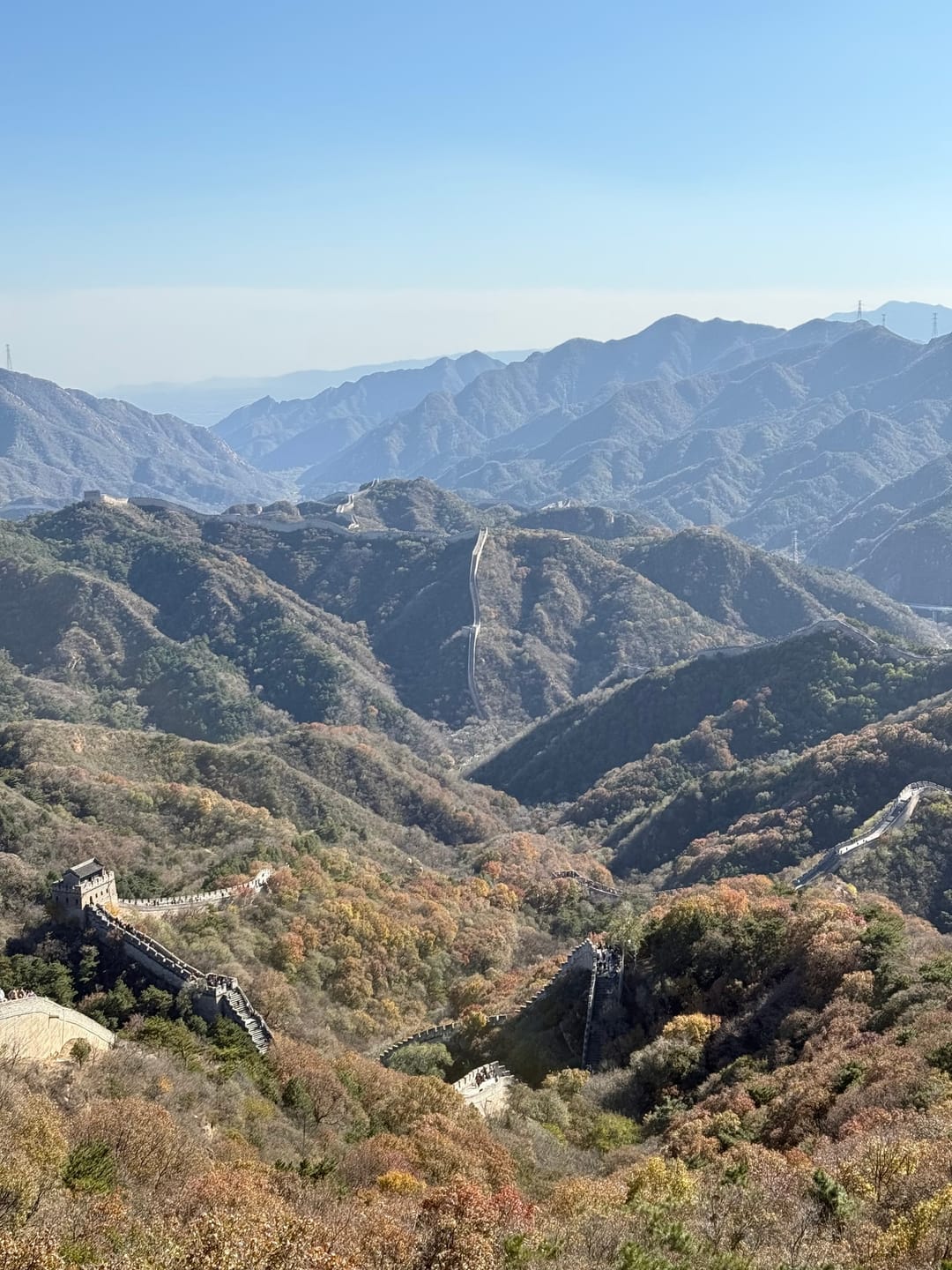
The Great Wall most visitors walk is the Ming wall north of Beijing, and the choice of section decides the day. Badaling is closest and busiest, Mutianyu greener and better for a first visit, Jinshanling and Simatai further and wilder. Each has its own booking rule, ticket and way of getting there; what follows gives them for October 2026, with the facts about the wall itself.
The Great Wall around Beijing
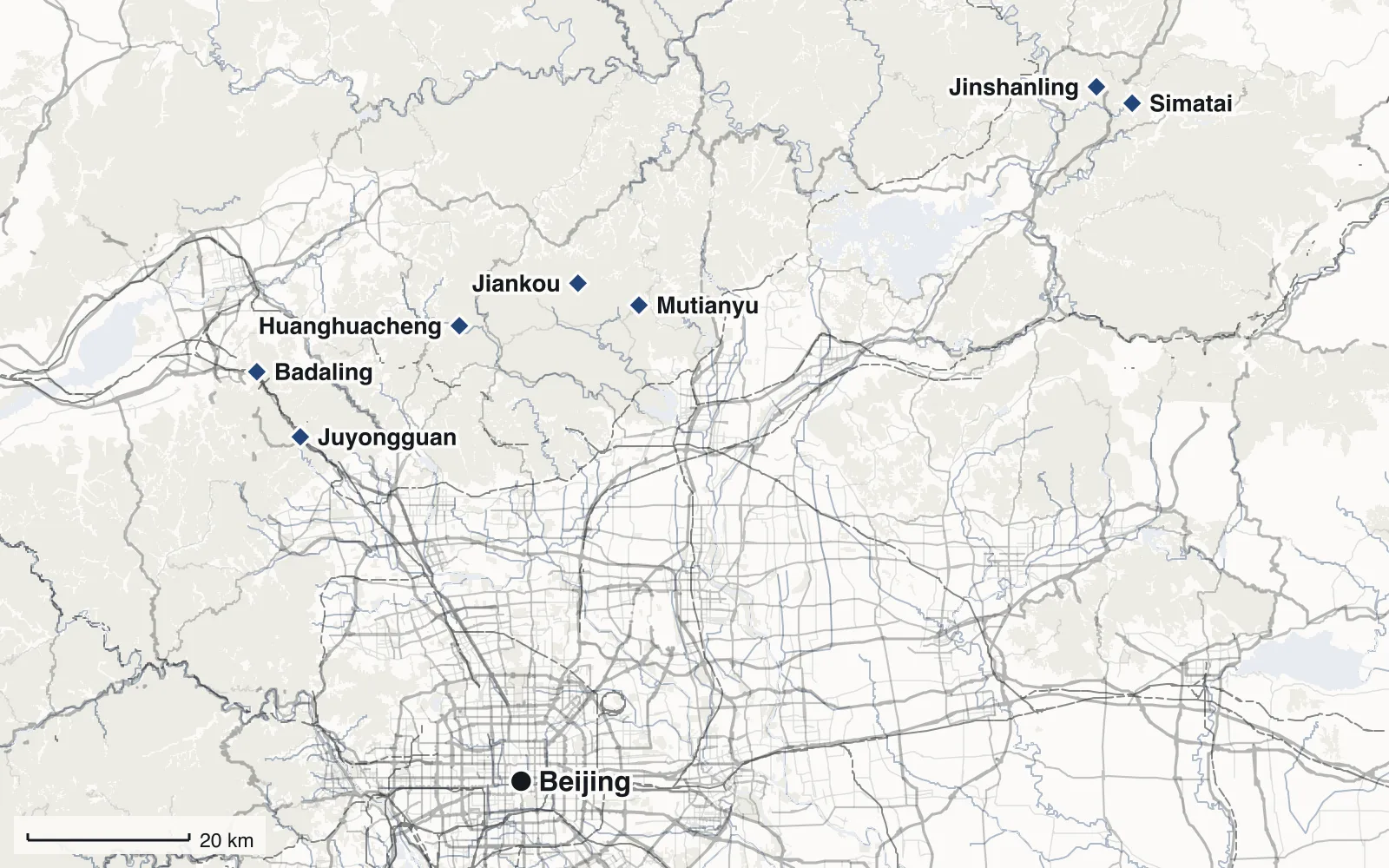
- City
- Sight
Map: The China Atlas · Data: © OpenStreetMap contributors, © OpenMapTiles, OpenFreeMap
Which section of the Great Wall should you visit?
For a first visit without a car, Mutianyu or Badaling: Mutianyu if you want a quieter, greener walk with a toboggan for the way down, Badaling if you want to arrive by train in under half an hour from Qinghe. Jinshanling suits those who want a long walk on a partly restored wall; Simatai suits an overnight stay at its foot, with the wall lit at night.
| Section | From central Beijing | Ticket | Booking | Cable car |
|---|---|---|---|---|
| Badaling | 60 km, train from Qinghe 19 min | 40 yuan (35 Nov to Mar) | Online, up to 7 days | 100 one way, 140 return |
| Mutianyu | 70 to 80 km, about 2 h by bus | 40 yuan | Online, up to 30 days | 100 one way, 140 return |
| Jinshanling (Hebei) | 130 to 150 km | 65 yuan, 55 in low season | Tickets on site | 40 one way, 60 return |
| Simatai | 120 km, about 2 h by bus | 40 yuan by day | At least a day ahead | 130 one way, 200 return |
| Juyongguan | 50 to 60 km | 45 yuan (40 Nov to Mar) | Optional, up to 10 days | |
| Huanghuacheng | 70 km | 60 yuan | Online |
Updated:
Prices from each scenic area’s own pages and booking systems, and from Beijing’s tourism office, checked on 9 October 2026.
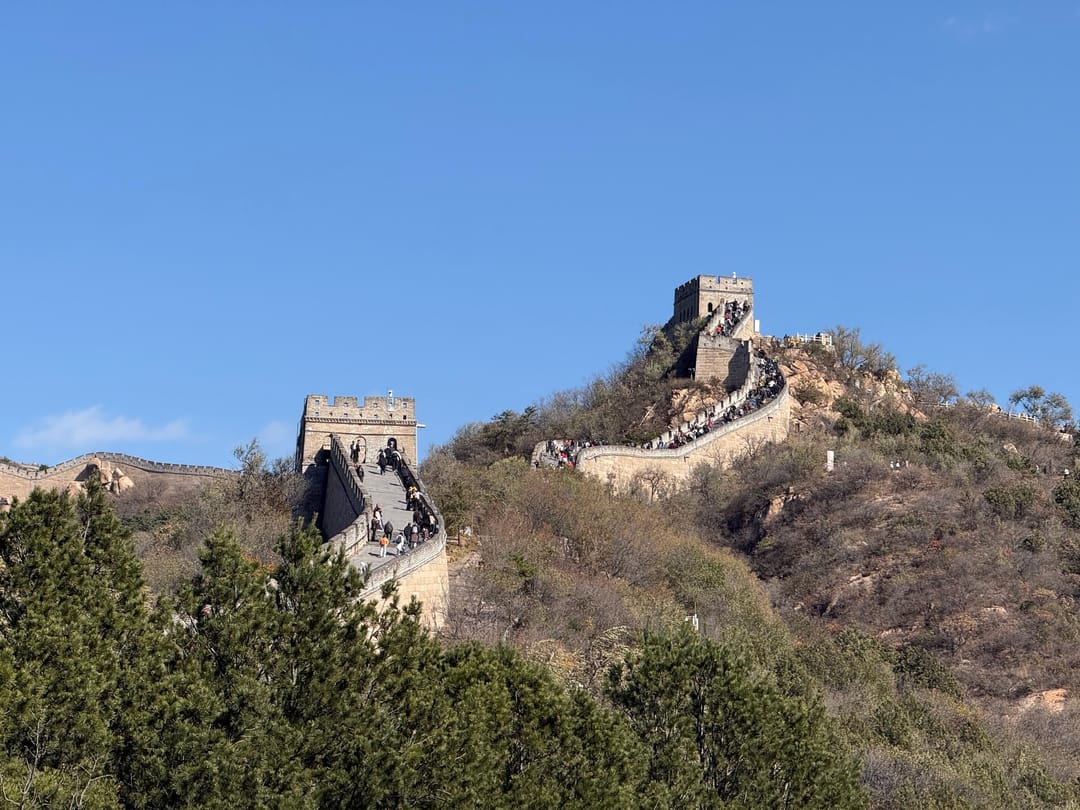
Badaling
Badaling is the section closest to the city, the one of the official photographs and of the largest crowds, rebuilt and fully equipped, with cable cars on both sides of the pass.
Tickets and booking
Entry costs 40 yuan from April to October and 35 yuan from November to March, and is free for under-18s and over-60s with ID, according to the city’s English portal. Tickets are checked from 6:30 to 16:30 in high season and from 7:30 to 16:00 in winter. Badaling has required a booking under your name since 1 June 2019, up to seven days ahead, and its notice of 13 August 2026 still asks visitors to book online; the city’s portal says tickets are also sold on site, so book anyway. The daily reference capacity set in 2019 is 65,000 visitors, and on May Day 2025 more than 100,000 came in a single day, according to the Ministry of Culture and Tourism.
Getting there by train
The high-speed line to Zhangjiakou stops at Badaling Great Wall station, 19 minutes from Qinghe for 21 to 25 yuan in second class, with 19 trains on an October weekday, and 27 to 37 minutes from Beijing North for 25 to 31 yuan, according to 12306, where tickets are booked as explained in China train tickets. Not every train stops there, so check the return times when you arrive. The old S2 line now starts at Nankou, not in the city, since 25 October 2025, as the city government announced. Bus 877 still runs from Deshengmen, in about 70 minutes, and a bus from Capital Airport leaves at 6:00 and 8:00, returning at 14:00 and 16:00, for 30 to 80 yuan.
The climb and the cable car
The north side, towers 1 to 12, is about 3 km long, steep and the busier, with its highest point at North Tower 8, 888 metres up; the south side, towers 1 to 7, is shorter and gentler, according to visitors’ guides. Two neighbouring stretches, Shuiguan and the Badaling Ancient Great Wall, are run by the same district, and a 16.5 km trail linking them to Badaling and Huajiayao is planned, with the Badaling to Huajiayao link announced for 2026. Cable cars on both sides cost 100 yuan one way and 140 return. A ramp and a lift opened in 2008 give step-free access to a first platform, and the visitor centre lends wheelchairs; in 2025, wheelchair users reached North Tower 1, as the Beijing Daily reported. The night opening ran from 30 April to 6 October 2026 and is closed in late October. Badaling received more than 500,000 visitors from abroad in 2025, its highest figure in ten years, according to the Economic Daily.
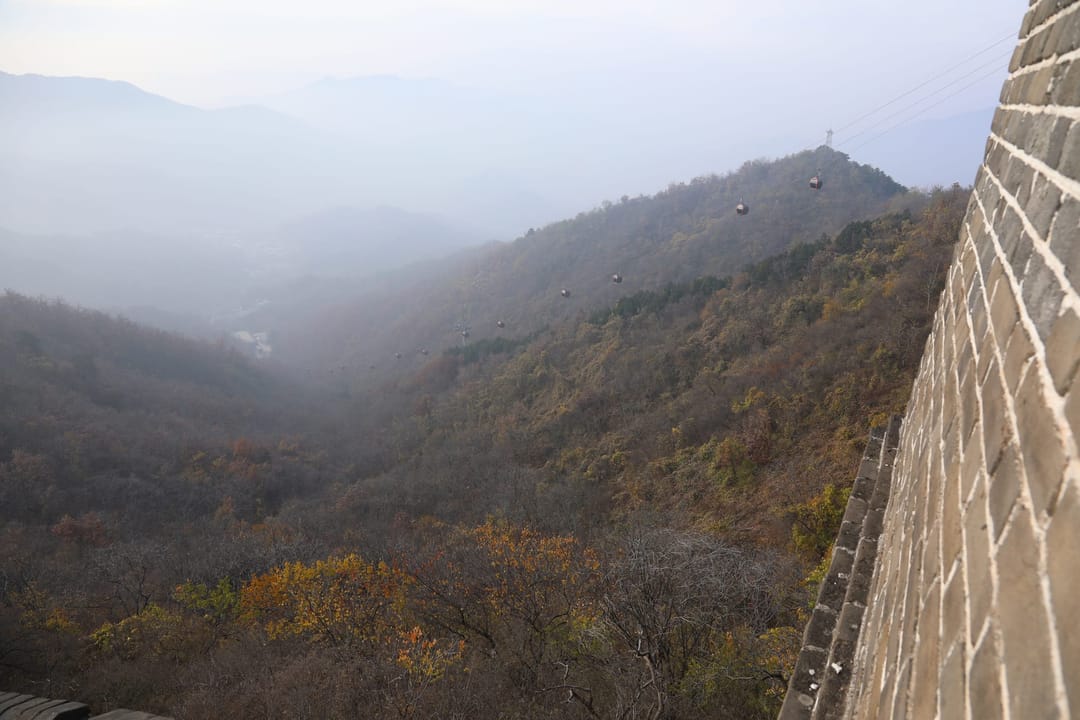
Mutianyu
Mutianyu, north-east of the city, is greener and less crowded than Badaling, with crenellations on both sides of the walkway and three ways up and down.
Tickets and booking
Entry costs 40 yuan. Bookings open 30 days ahead, under your name, with one ticket per passport per day, on the official site and the scenic area’s WeChat account; until 2023 the window was 15 days. From 16 March to 15 November the site opens from 7:30 to 18:00 on weekdays and to 18:30 at weekends, from 8:00 to 17:30 in winter, and stops selling an hour before closing. It closes in thunderstorms and heavy rain, as it did for several days in July and August 2026.
Cable car, chairlift and toboggan
A shuttle bus, 15 yuan return, covers the 3 km from the entrance area to the lifts in six or seven minutes. Two companies run them: one the cable car, the other the chairlift and the toboggan, a metal slide down the mountainside. Each costs 100 yuan one way and 140 return, and a ticket for one does not work on the other. The cable car, rebuilt in 2022 with eight-seat cabins, has step-free access. A stretch between towers 16 and 17 has been under restoration since May 2026. Evening openings ran on holidays and summer nights in 2026, at 200 yuan with the cable car over the May Day holiday, and the site announced an opening until 20:00 on 27 September; check the official account for late October. Mutianyu passed one million visitors from abroad in 2026 before the October holiday, as China News Service reported.
Getting there
Bus 916 from Dongzhimen runs to Huairou, where local buses H23, H24, H35 and H36 continue to Mutianyu, about two hours in all. On holidays and some weekends, a tourist bus leaves the Wangjing West hub at 9:45 and returns at 15:30, for 80 yuan return, if at least 15 people have booked, according to the Beijing Daily.
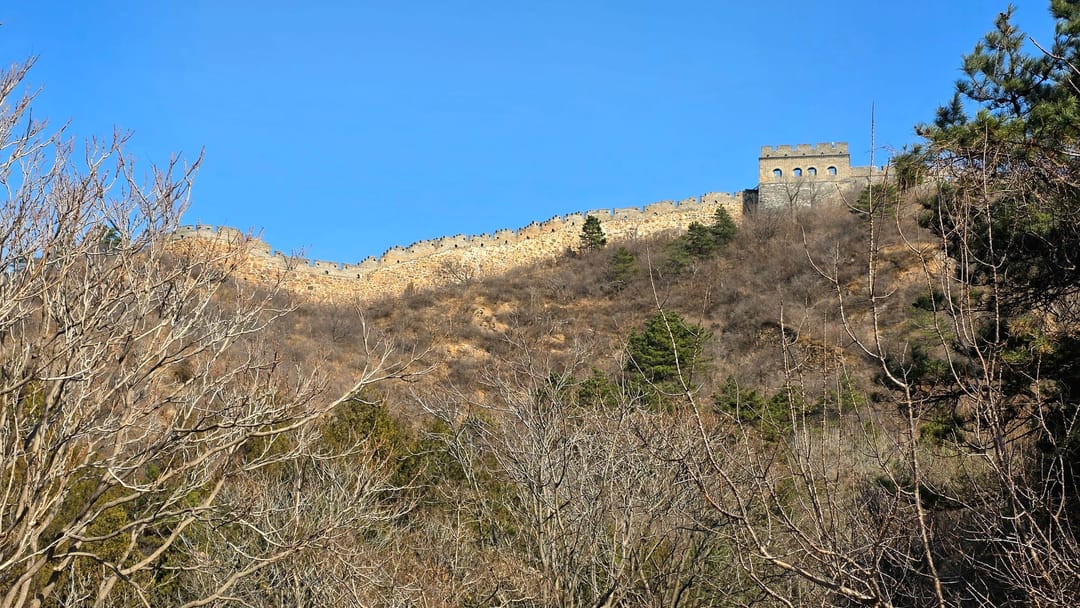
Jinshanling
Jinshanling, across the border in Hebei, is a long, partly restored stretch along the ridges, with towers close together, popular with walkers and photographers. Entry costs 65 yuan in high season and 55 in low season; the operator and the Hebei press give different dates for the switch, so in late October expect either. The cable car runs in season, at 40 yuan one way and 60 return, and stops in winter. In high season the main gate opens at 4:00, for sunrise, ticket sales stop at 17:00, entry at 17:30, and the site closes at 18:30; the east gate keeps shorter hours, from 8:00 to 16:00, and closed in winter 2024 for fire prevention.
It lies 130 to 150 km from Beijing. A tourist bus leaves the Wangjing West hub at 8:00 and returns at 16:00 on weekends and holidays until 25 October 2026, for 90 yuan, or 50 paid with a transit card or code. Otherwise, the high-speed train from Beijing Chaoyang reaches Chengde South in 49 minutes for 106 yuan, and the last hour is by car. The S5 suburban train reaches Gubeikou from Beijing North in two and a half hours for 12 yuan, twice a day, but no public bus continues to Jinshanling. Walking on from Jinshanling to Simatai is not possible: the two are run by different companies, one in Hebei and one in Beijing, and the link between them is not open.
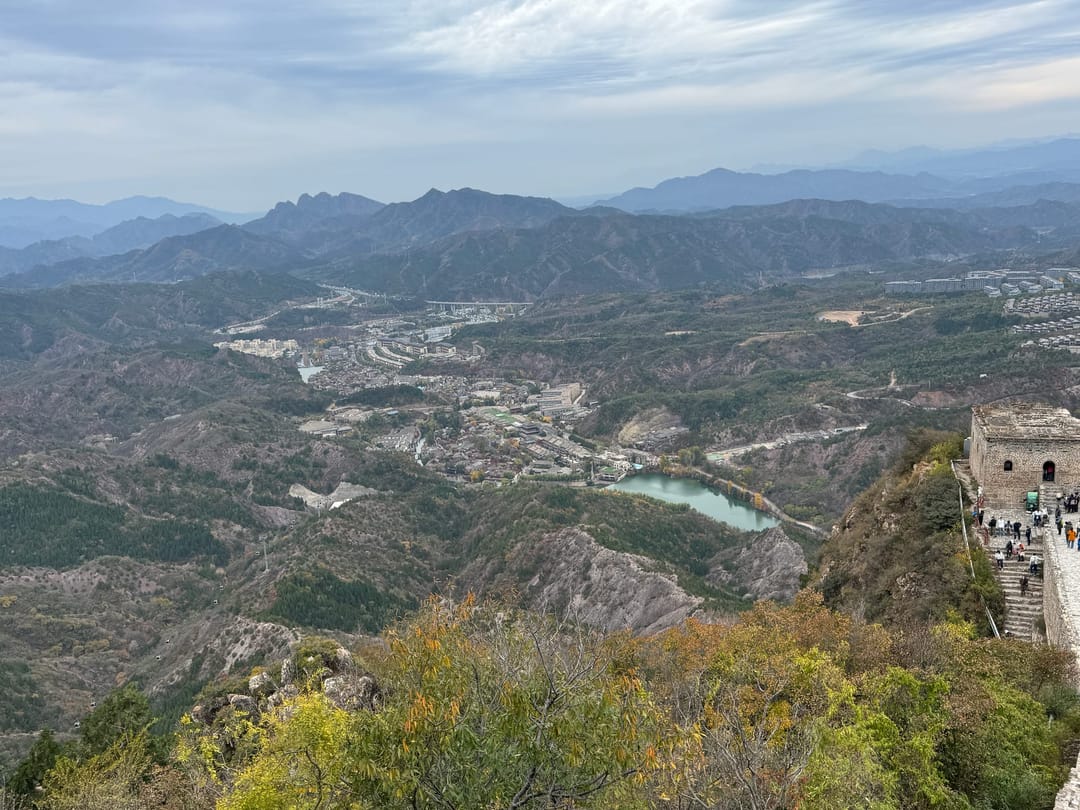
Simatai and Gubei Water Town
Simatai, in Miyun district, climbs steeply above a reservoir, with Gubei Water Town, a rebuilt old town run by the same company, at its foot. By day the wall costs 40 yuan, booked at least a day ahead, with entry in timed batches from 9:00 to 15:00; the cable car costs 130 yuan one way and 200 return. Night visits, with entry from 18:00 to 21:30 from May to October, cost 200 yuan with the return cable car, and a sunrise ticket, from 6:30 to 8:30, 100 yuan, on the operator’s booking system for late October 2026. The water town itself costs 140 yuan.
Buses leave the Wangjing West hub at 9:00 and 13:00 and take about two hours, for 48 yuan; the return buses leave at 12:00 and 17:00, according to the water town’s travel page. The S5 suburban train also reaches Gubeikou, where a shuttle leaves for the water town at 9:40 and 17:10. The water town stays open until 22:30, and 23:00 on Fridays and Saturdays. With a night visit, staying in Gubei is simpler than going back the same day.
Juyongguan and Huanghuacheng
Two smaller sections suit a half day, or a second visit after Badaling or Mutianyu.
Juyongguan
Juyongguan is a fortified pass in a valley 50 to 60 km north-west of the city, where the wall climbs steeply on both sides. It costs 45 yuan from April to October and 40 from November to March, and from 8 October opens from 8:30 to 17:00, last entry 16:30, according to Beijing’s tourism office. Tickets are sold at the gate or online up to ten days ahead. On holidays, a tourist bus leaves Beitucheng metro station at 8:00, 9:00 and 10:00, for 25 yuan, or 15 with a transit card or code. The evening opening ended on 6 October. Buses 879 and Changping 20 stop at the pass; the eastern mountain stretch was closed in 2024 for a landslide risk.
Huanghuacheng
Huanghuacheng, 70 km north of the city in Huairou, is where three stretches of the wall, built from 1404, run down into a reservoir. Entry costs 60 yuan, and boats on the lake are extra, from 30 yuan for a one-way speedboat, according to the scenic area’s price list. It opens from 8:30 to 17:00 on summer weekdays, 8:00 to 18:00 on Saturdays, and 8:30 to 16:30 in winter. Bus 916 from Dongzhimen to Huairou connects with a local line to the site, and on weekends and holidays a direct bus leaves Dongzhimen at 8:30.
Three ways to plan the day
Each plan below uses public transport or the official buses, with times from 12306 and the operators for late October 2026.
Badaling by train
Take metro line 13 or the Changping line to Qinghe, then a morning train such as the 6:40, 7:45 or 8:52, 19 minutes to Badaling Great Wall station. You are on the wall before the tour buses, can ride the cable car up and walk back down, and catch an early-afternoon train back. The day costs about 230 yuan a person: two train tickets of 21 to 25 yuan, the 40-yuan entry and 140 for a return cable car, or 90 without it.
Mutianyu by tourist bus
On holidays and the weekends it runs, the tourist bus from Wangjing West leaves at 9:45 and comes back at 15:30, which leaves about four hours on site: shuttle, cable car up, a walk along the towers, and the toboggan down. Count 80 yuan for the bus, 40 for entry, 15 for the shuttle and 200 for a cable car up and a toboggan down, which belong to two operators. On other days, bus 916 and a local bus take about two hours each way.
Simatai overnight
Take the 13:00 bus from Wangjing West, spend the afternoon in Gubei Water Town and enter the wall at dusk for the night visit, at 200 yuan with the cable car, then sleep in the water town and catch a sunrise ticket the next morning before the 12:00 bus back. It is the only plan that shows the wall both lit and at dawn.
Rules on the wall
The rules come from two texts: the national Great Wall regulations of 2006 and Beijing’s own, adopted on 28 November 2025 and in force since 1 March 2026.
Jiankou and the unopened wall
Most of the wall around Beijing is not open to visitors: Jiankou, 10 km east of Mutianyu, is the best known of these unrestored sections, steep and crumbling. Beijing’s regulations ban organised activities on sections not opened to visitors and let districts post warnings and electronic fences to keep people off them, according to the full text. The national regulations of 2006 fine individuals 1,000 to 5,000 yuan for organised activities there. In 2024 a company was fined 4,000 yuan for taking a group onto an unopened section in Yanqing, and in March 2026 firefighters spent about ten hours rescuing hikers after a fall on one in Miyun. On these sections there is no maintained path and no help at hand.
What is banned on the wall
On every section in Beijing, the 2026 regulations ban carving or writing on the wall, taking bricks or earth, lighting fires and driving across it; fires cost individuals 1,000 to 5,000 yuan. On 23 March 2026, two visitors who carved their names between North Towers 8 and 9 at Badaling were detained, fined and blacklisted, according to the city’s cultural inspectors.
Beyond Beijing
The wall runs from Liaoning in the east to Gansu in the west, and two of its ends are worth the journey on their own.
Shanhaiguan, where the wall meets the sea
At Shanhaiguan, in Hebei, the wall reaches the Bohai Sea at Laolongtou, the “Old Dragon’s Head”, which costs 60 yuan; the First Pass Under Heaven costs 50, and a combined ticket 140, according to the district tourism bureau, which also lists the Mengjiangnü Temple at 25 yuan and Jiaoshan, where the wall climbs the first mountain, at 40. Children up to six and visitors over 70 enter free. The fastest train from Beijing Station takes 2 hours 8 minutes, for 149 yuan in second class. UNESCO describes the wall as beginning here; China’s survey places the eastern end of the Ming wall further north-east, at Hushan in Liaoning.
Jiayuguan, the western end
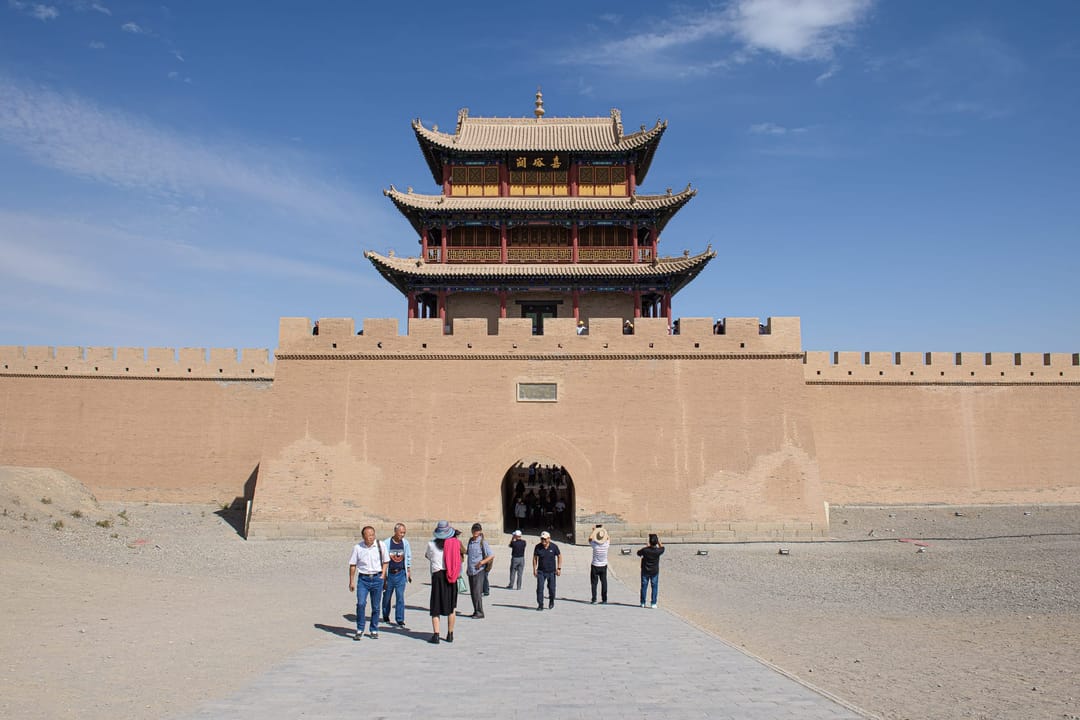
Jiayuguan Pass, in Gansu, is the great fortress at the western end of the Ming wall, on the old road west. It costs 110 yuan from May to October and 90 from November to April, and opens from 8:00 to 18:30 in summer; the Overhanging Wall and the First Beacon Tower, outside the fort, cost 21 yuan each. The overnight train from Beijing West takes almost 20 hours; from Lanzhou the fastest trains take 4 hours.
From Shanghai
There is no Great Wall near Shanghai. The fastest train to Beijing takes 4 hours 24 minutes, which makes a day trip by rail impractical; agencies sell day trips by plane, flying out at dawn and back at night. A night or two in Beijing is the better plan, as set out in the Beijing guide.
When to go
Spring and autumn are the seasons for the wall. Badaling sits about 600 metres higher than the city, and Yanqing district averages about 3°C cooler than Beijing in summer, according to the city government. Near Yanqing, October days average 17°C and nights 4°C, and November days 8°C, according to China Meteorological Administration normals. Autumn colours, mostly smoke trees and Shantung maples, run from early October to early November at Badaling and peak in late October at Mutianyu, according to Visit Beijing. Summer brings heat and thunderstorms: Beijing’s flood season runs from 1 June to 15 September, with the heaviest rain from 20 July to 10 August, when sites close at short notice. Winter is cold and clear, with snow a few days a month and fewer people.
Avoid the national holidays: on 3 May 2026, 92,200 people visited the Badaling scenic area in a day, according to Beijing’s official account. The week from 1 October and the first days of May are the busiest; the guide to the best time to visit China gives the holiday dates.
Planning the day
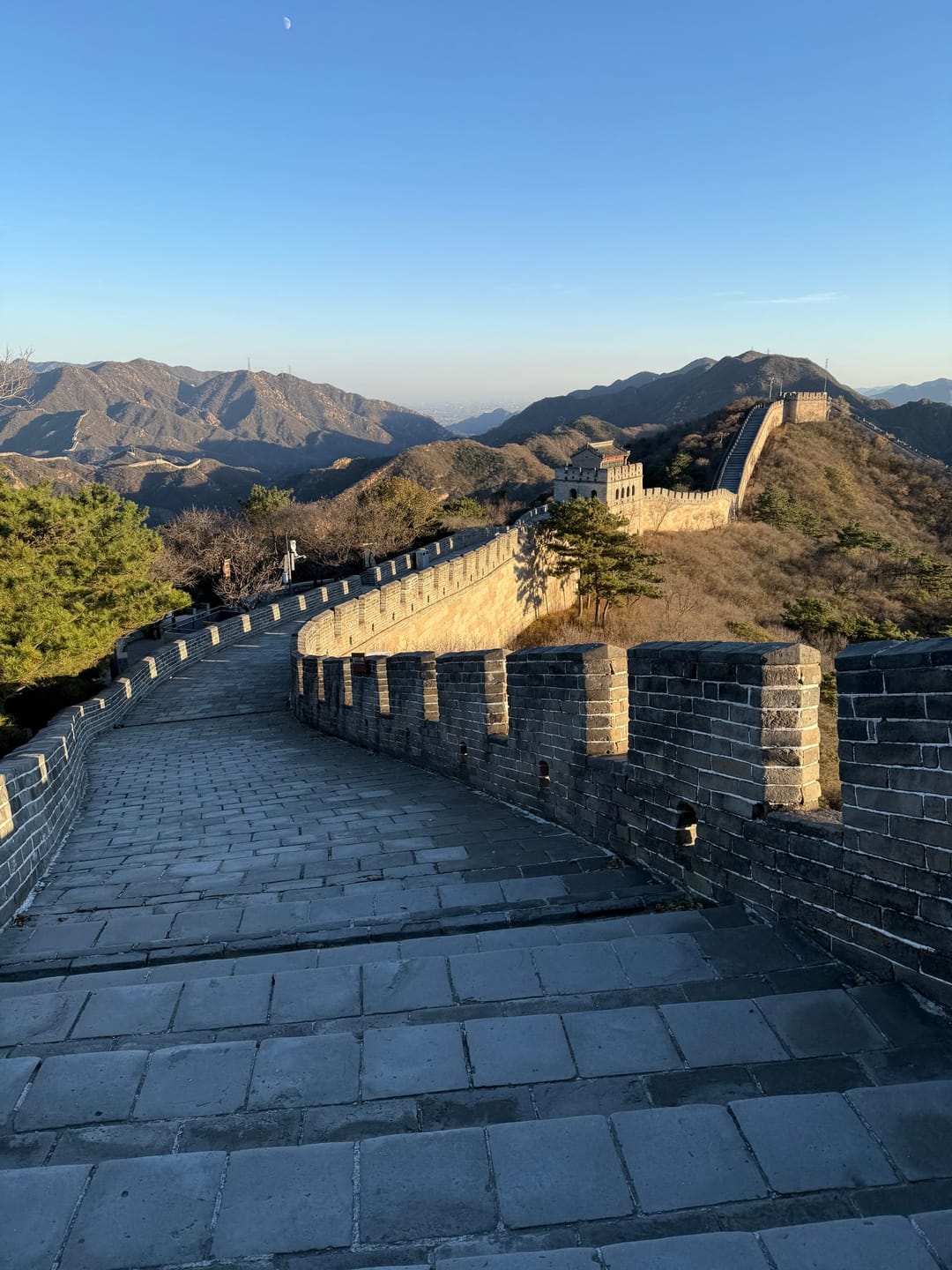
A visit to Badaling or Mutianyu takes half a day on the wall plus the journey, so leave Beijing early and you are back by evening. Jinshanling and Simatai deserve a full day.
What to bring
Comfortable shoes with grip, water and snacks, sun protection and a layer for the wind on the ridges; the steps are uneven and some are very high. Bring your passport: it is the ticket, and you show it at the gate.
With children or limited mobility
Mutianyu’s cable car and toboggan make it the easier choice with children; the toboggan operator sets its own conditions for young riders, so check them when you book. Badaling has the step-free ramp and lift, and both sites lend wheelchairs, though the walkway itself is steep and stepped beyond the first platform.
Drones
Since 1 May 2026 it has been illegal to bring a drone into Beijing, where every flight needs air-traffic approval; from 15 November 2026 any flight is banned, with the drone confiscated and fines of 1,000 to 10,000 yuan, according to the city’s People’s Congress. Jinshanling, in Hebei, falls under national rules.
The Great Wall in figures
China’s national survey, announced by the National Cultural Heritage Administration on 5 June 2012, measured 21,196.18 km of walls and trenches from all periods, across 15 provincial regions, counting parallel and overlapping lines, as China News Service reported. The Ming wall, built between 1368 and 1644 and the one visible around Beijing, runs 8,851.8 km from Hushan in Liaoning to Jiayuguan in Gansu, of which 6,259.6 km is built wall and the rest trenches and natural barriers such as ridges and rivers. The survey counted 43,721 elements in all: 10,051 sections of wall, 29,510 towers, beacons and other structures, and 2,211 passes and forts. Beijing alone has 520.77 km of wall, across six districts from Pinggu to Mentougou.
The first walls date from the seventh century BC, in the Spring and Autumn period. After the unification of China in 221 BC, the Qin linked earlier walls into one line, from about 214 BC under General Meng Tian. The Han extended it west to Yumenguan, in Gansu, and later dynasties rebuilt it, until the Ming gave it the brick and stone form seen near Beijing. UNESCO inscribed the Great Wall as a World Heritage Site in 1987. Of the Ming built wall, survey data relayed by People’s Daily in 2015 class 8.2% as in good condition and 31.3%, about 1,962 km, as gone.
The wall is not visible to the naked eye from space. Yang Liwei, China’s first astronaut, said in 2003 that he did not see it, as People’s Daily reported, and NASA notes that its photographs of it from the space station needed powerful lenses.
Mistakes to avoid
- Arriving without a booking at Badaling or Mutianyu, or booking under a different passport from the one you carry.
- Going on a national holiday, when Badaling can pass 100,000 visitors in a day.
- Following an online route onto an unopened section such as Jiankou.
- Missing the last train back from Badaling: check the times before you climb.
- Buying a cable car ticket at Mutianyu and expecting it to work on the toboggan.
- Counting on a walk from Jinshanling to Simatai.
- Packing a drone.
Frequently asked questions
Do you need to book the Great Wall in advance? At Badaling and Mutianyu, yes, online under your passport: up to seven days ahead at Badaling, 30 at Mutianyu. Simatai needs a day’s notice.
Do you need your passport for the Great Wall? Yes. Tickets are issued under your name and passport number, and the passport is checked at the gate.
How much is a Great Wall ticket? 40 yuan at Badaling and Mutianyu, 65 or 55 at Jinshanling, 40 by day at Simatai; cable cars cost extra, 100 to 140 yuan at the two main sections.
How far is the Great Wall from Beijing? Badaling is about 60 km away and 19 minutes by train from Qinghe; Mutianyu 70 to 80 km, about two hours by public transport.
Is the Great Wall in Shanghai? No. The nearest section is north of Beijing, more than four hours from Shanghai by the fastest train.
Which section is best for families? Mutianyu, for the cable car up and the toboggan down, and a walkway with crenellations on both sides.
How long is the Great Wall? 21,196.18 km for all walls of all periods together, according to China’s 2012 survey; the Ming wall alone runs 8,851.8 km.
When was the Great Wall built? From the seventh century BC onwards, joined into one line by the Qin after 221 BC; what visitors see near Beijing dates mostly from the Ming dynasty, 1368 to 1644.
Can you see the Great Wall from space? Not with the naked eye: the wall is narrow and close in colour to the land around it, so pictures of it from orbit need a telephoto lens.
Can you walk the whole Great Wall? No. Visitors walk the opened sections, a few kilometres at a time; most of the wall is ruined, remote or closed to the public.
Do you need a guide for the Great Wall? Not at Badaling or Mutianyu, where tickets are booked online and the transport is simple. A driver helps for Jinshanling and Simatai.
How long do you need at the Great Wall? Count a morning for Badaling or Mutianyu, back in Beijing by mid-afternoon if you start early. Jinshanling is a day out, and Simatai’s evening opening means a night in Gubei.