Practical · Trip planning
China trip cost: a daily budget, line by line
What a trip to China costs in 2026, from hotels and meals to trains, sights and entry: daily budgets and one-, two- and three-week totals, with dated prices.
thechinaatlas.com/en/china-trip-cost
In this article
On the ground, China is cheaper than its reputation: count roughly 30 to 40 dollars a day each on a tight budget, 60 to 90 in mid-range hotels and 130 to 175 in five-star comfort, for a couple sharing, plus the long-haul flight. Those figures add up, line by line, official hotel statistics, 12306 train fares, entrance fees and restaurant prices checked in October 2026; the sections below give each.
How much does a trip to China cost?
A day, by travel style
The table builds a day from the averages given further down: half a double room, three meals, local transport and one or two paid sights.
| Style | Room, per person | Food | Local transport | Sights | Per day |
|---|---|---|---|---|---|
| Budget | 80 to 110 yuan | 60 to 80 | 10 to 20 | 30 to 60 | 200 to 270 yuan |
| Mid-range | 200 to 300 yuan | 120 to 180 | 30 to 50 | 60 to 120 | 410 to 650 yuan |
| Comfort | 450 to 500 yuan | 250 to 350 | 100 to 150 | 150 to 250 | 950 to 1,250 yuan |
Updated:
At the 2025 average rate of 7.14 yuan to the dollar published by the National Bureau of Statistics, that is about $28 to $38, $57 to $91 and $133 to $175 a day. Shanghai pushes the room line up; Xi’an, Chengdu and Guilin bring it down.
What visitors actually spend
Official figures give a benchmark. Visitors to Beijing spent about $1,290 each in 2025, and to Shanghai about $1,590, dividing each city’s inbound tourism revenue by its number of inbound visitors in their statistical communiqués; the Beijing communiqué gives 5.48 million visitors and $7.08 billion. Across China, 154.5 million inbound visitors spent $131.1 billion, but three quarters came from Hong Kong, Macao and Taiwan, often on short trips.
Before you go
Four costs come before the first yuan: the flight, the entry rules, insurance if you want it, and mobile data.
Flights
Return economy fares to Beijing or Shanghai averaged about £655 to £680 from London, $1,190 to $1,270 from New York, $960 to $1,075 from Los Angeles and A$1,180 to A$1,220 from Sydney over the 12 months to October 2026, according to KAYAK’s search data; from Germany and Italy the averages ran from €674 to €886. Chinese airlines, which can still fly over Russia, carry most of the traffic to Europe, as Aviation Week reported, while flights between the United States and China remain capped at about 50 round trips a week for each side, according to Reuters in September 2026.
Visa
Fifty nationalities, among them the United Kingdom and Canada since 17 February 2026, Australia and most of the European Union, enter for up to 30 days without a visa until 31 December 2026, so entry costs nothing. Americans still need a visa: $140 whatever the number of entries, plus $25 for express processing, until the end of 2026, according to the Chinese embassy in Washington. The 240-hour transit exemption, open to 57 nationalities with an onward ticket to a third country, is free. Who qualifies is set out in China visa-free entry.
Insurance
China does not require travel insurance for visa-free entry or for the transit exemption: it appears nowhere in the conditions published by its embassies and its immigration administration. Whether to buy a policy, and at what price, is left to you.
Mobile data
An eSIM with 10 GB for 30 days cost between $16 and $26.50 with the main providers on 8 October 2026; the comparison, and what each promises about blocked apps, is in the eSIM guide.
Accommodation in China
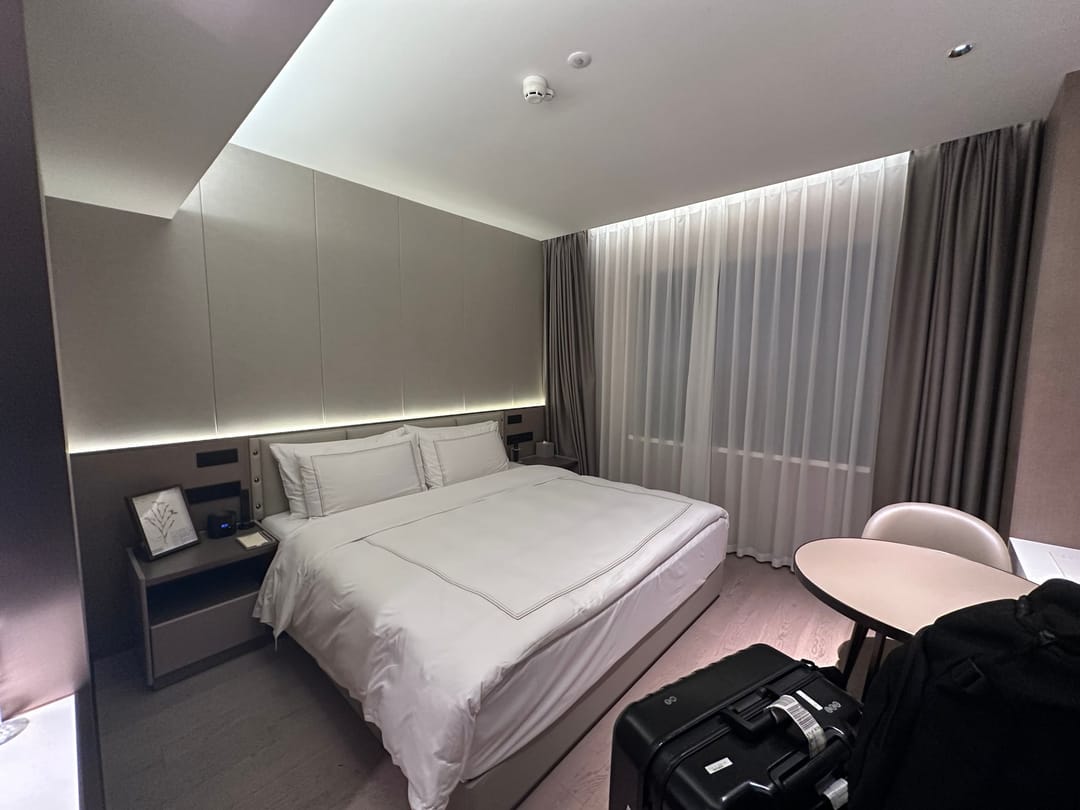
The room is the largest daily cost, and the one that varies most between cities. Since May 2024, national rules forbid hotels to turn foreign guests away for lack of a licence, so the whole range is open to you.
Hostels and budget chains
A dorm bed in a Beijing or Shanghai hostel cost about €7 to €27 a night on Hostelworld in October 2026, most around €10 to €15. The budget chains are the backbone of Chinese travel: across mainland China their average nightly rates were 220 yuan at Hanting’s economy hotels and 193 yuan at Home Inn’s in the second quarter of 2026, and 164 yuan at Jinjiang’s economy hotels in the first half, according to the groups’ results; the H World filing gives Hanting’s. Expect more in central Beijing and Shanghai.
Mid-range and star hotels
Star-rated hotels averaged 360 yuan a night across China in 2025, with 46.8% of rooms occupied, according to the Ministry of Culture and Tourism. Shanghai is the most expensive: its star hotels averaged 770 yuan from January to August 2026, and its five-star hotels 994, according to the city statistics bureau. The upper-midscale chain Atour averaged 438 yuan nationally in the second quarter.
By city
The ministry’s latest breakdown by city covers the summer of 2024, a peak season, so read it as a ceiling for the same standard of hotel:
| City (summer 2024) | Star-hotel average | 5 stars | 4 stars | 3 stars |
|---|---|---|---|---|
| Beijing | 613 yuan | 899 | 531 | 407 |
| Shanghai | 721 yuan | 922 | 484 | 359 |
| Hangzhou | 428 yuan | 575 | 383 | 298 |
| Xi’an | 407 yuan | 602 | 278 | 238 |
| Chengdu | 400 yuan | 531 | 313 | 290 |
| Guilin | 292 yuan | 504 | 213 | 161 |
Updated:
Where to stay in each city is covered in the Beijing guide, the Shanghai guide, the Xi’an guide and the Chengdu guide.
Food and drink
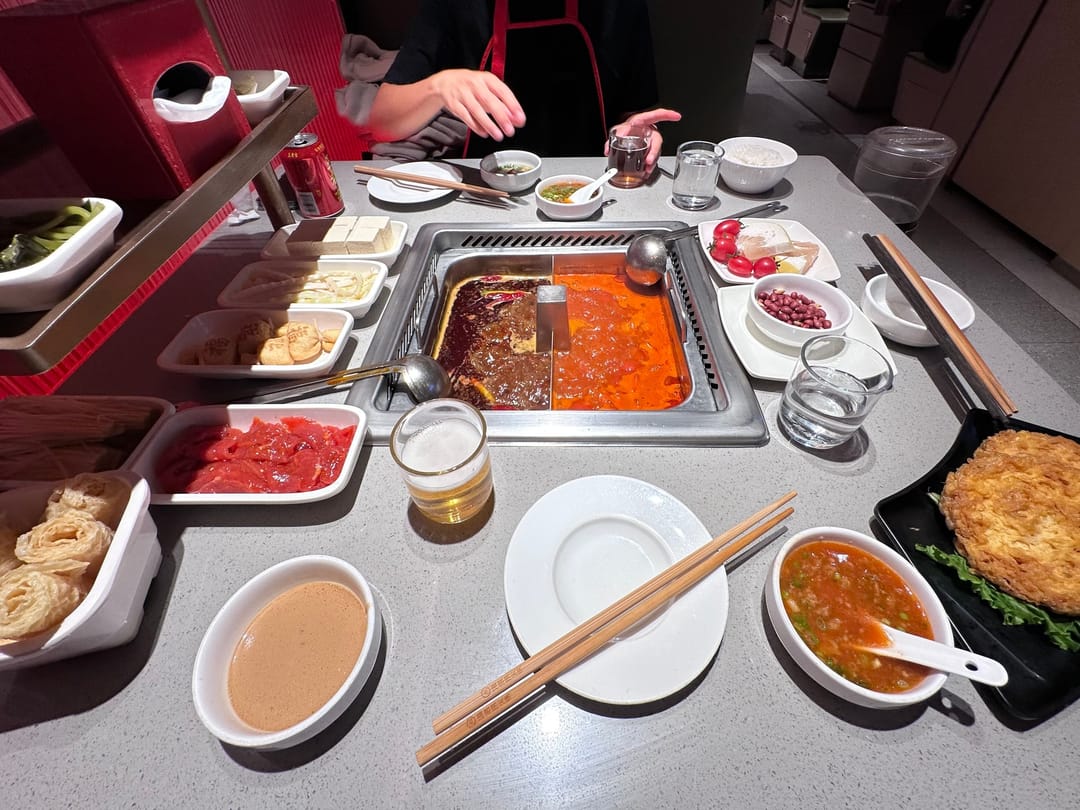
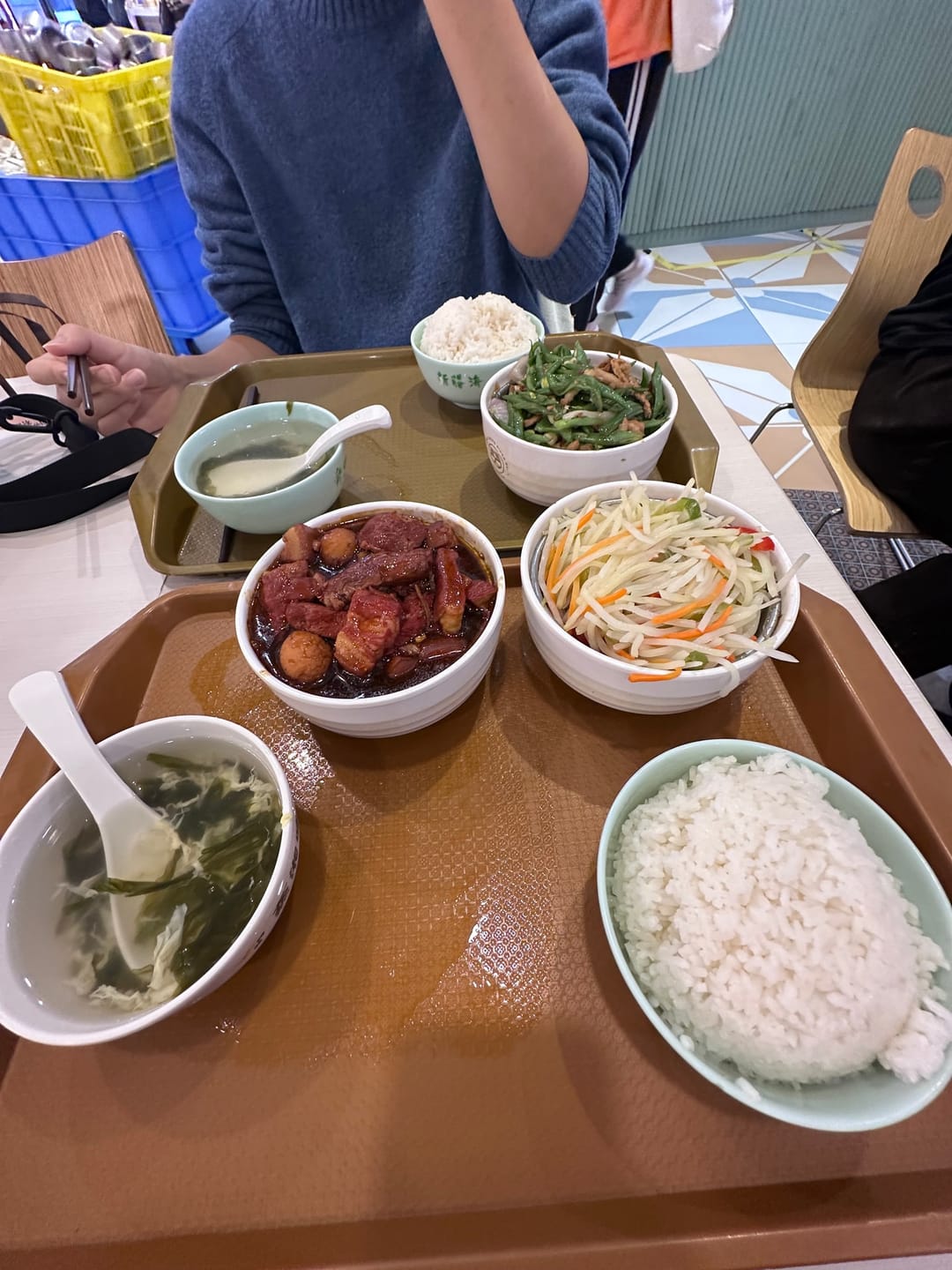
Food is where a budget stretches furthest: a filling meal in a local restaurant costs less than a coffee in a chain café.
Breakfast and street food
At a community breakfast counter in Beijing, youtiao, sesame flatbread, soy milk and vegetable buns cost 2 yuan each, and a full breakfast less than 10, according to the city government’s portal; that is the low end. In central Shanghai, a 2026 survey of breakfast stalls found youtiao at 3 yuan, soy milk at 8 and a basket of xiaolongbao at 13.
Local restaurants
A meal in an inexpensive restaurant costs about 30 yuan in Beijing and Shanghai and under 20 in Chengdu and Xi’an, and a three-course dinner for two in a mid-range restaurant about 200 yuan in the first two and 120 to 150 in the others, according to Numbeo’s figures updated in early October 2026. A McDonald’s meal costs about 35 yuan. The dumpling houses of the MICHELIN Guide’s Bib Gourmand list sit in its cheapest price band.
Drinks and coffee
A cappuccino costs about 22 to 24 yuan in Beijing and Shanghai and 14 in Xi’an, a half-litre of local beer about 8 yuan in a restaurant, and 1.5 litres of water about 4 yuan in a shop, on the same figures. Tipping is not expected in restaurants or taxis, according to Trip.com and Wise; some high-end and hotel restaurants add a service charge of around 10%.
Getting around China
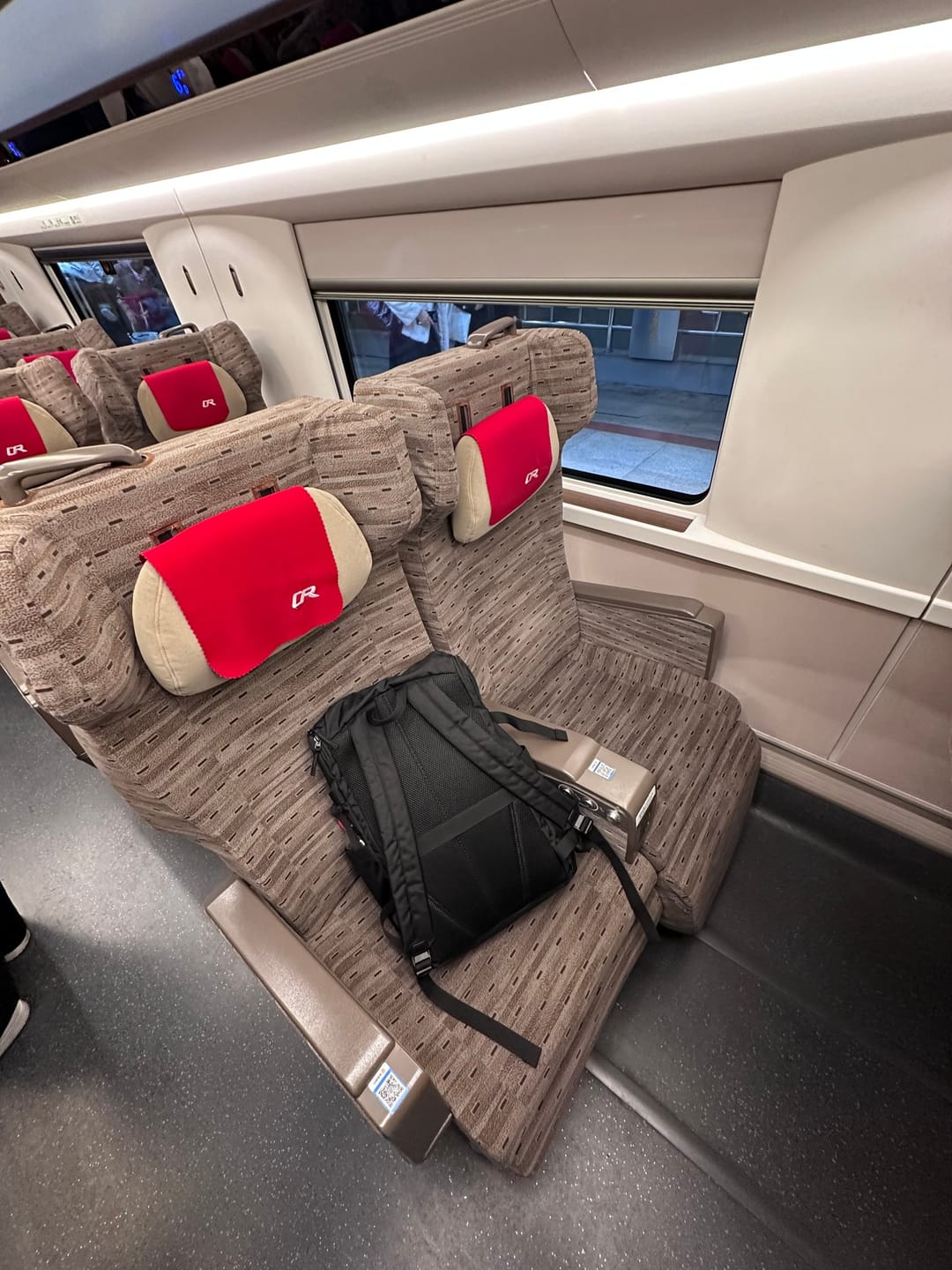
Transport costs little for the distances: the 1,318 km from Beijing to Shanghai cost 553 to 661 yuan in second class on the high-speed line, and a metro ride rarely passes 6 yuan.
Trains between cities
Fares are fixed by China Railway and are the same on 12306 and at the agencies, which may add a service fee. Second-class fares and the fastest journeys on 12306 for October 2026:
| Route | Second class | Fastest |
|---|---|---|
| Beijing South to Shanghai Hongqiao | 553 to 661 yuan | 4 h 18 |
| Beijing West to Xi’an North | 494 to 618 yuan | |
| Xi’an North to Chengdu East | 263 to 316 yuan | 3 h 05 |
| Guangzhou South to Guilin North | 177 to 224 yuan | 2 h 09 |
| Shanghai Hongqiao to Hangzhou East | 57 to 87 yuan | 45 min |
| Shanghai Hongqiao to Suzhou | 30 to 46 yuan | 25 min |
Updated:
First class costs about 1.6 times second class on the main lines, business class three to three and a half times. How to book, and what changes on a holiday week, is in the guide to China train tickets.
Metro and buses
In Beijing a metro ride costs 3 yuan up to 6 km and 6 yuan up to 32 km; in Shanghai 3 yuan for the first 6 km, then 1 yuan more every 10 km, and a fare rise of about 1 yuan went to a public hearing on 7 September 2026. Every gate in both cities takes foreign contactless cards. A day of sightseeing by metro rarely costs more than 20 yuan; Shanghai’s one-day pass costs 18.
Taxis and DiDi
Beijing taxis charge 13 yuan for the first 3 km and 2.30 yuan a kilometre after, Shanghai’s 14 yuan and 2.70, both with night surcharges. A taxi from Pudong Airport to People’s Square costs about 180 yuan, from Beijing Capital Airport to the centre 100 to 150 yuan plus a 10-yuan toll. DiDi, the ride-hailing app, works in English with a foreign card: see the DiDi guide.
Domestic flights
On the long routes, flying can cost about the same as the train. A one-way economy flight between Beijing and Xi’an or Chengdu, or between Shanghai and Chengdu or Guilin, averaged about $90 to $120 including taxes in October and November 2026, according to Trip.com’s fare data. Taxes come to 140 yuan a flight on routes over 800 km for tickets sold from 10 October 2026: a 50-yuan development fund and a 90-yuan fuel surcharge, as Guangming Daily reported. Holiday weeks are dearer: the average domestic fare over the 2026 National Day week was about 930 yuan, and fares fell by more than 30% in the weeks after.
Sights and entrance fees
Most of China’s great sights cost 30 to 120 yuan, and many of the best are free.
Beijing
The Forbidden City costs 60 yuan from April to October and 40 from November to March, the Temple of Heaven 34 yuan with its halls, the Summer Palace 60 yuan for the combined ticket. Tiananmen Square, the National Museum and the Mao Memorial Hall are free, with a booking. The details are in the Beijing guide.
Shanghai
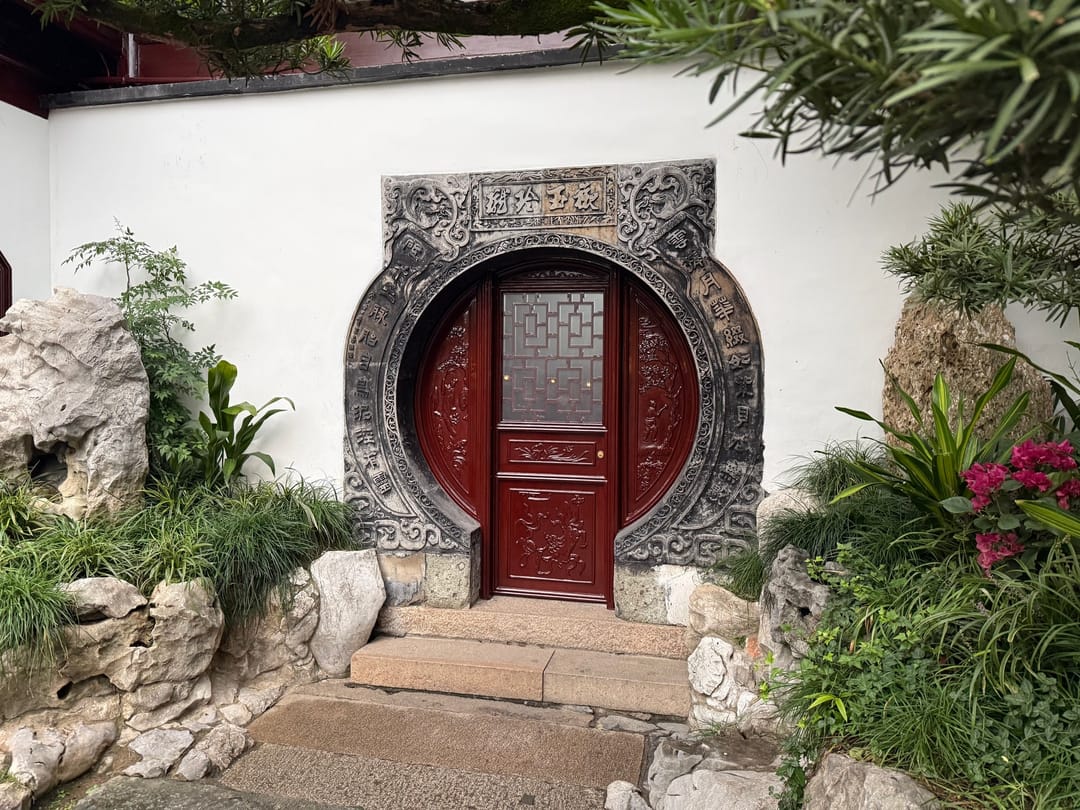
The Bund, the old lanes and Shanghai Museum East cost nothing. Yu Garden costs 40 yuan in high season, the Shanghai Tower’s observatory 180, a river cruise 120 by day, and Disneyland 475 to 599 yuan on ordinary dates, as set out in the Shanghai guide.
The Great Wall
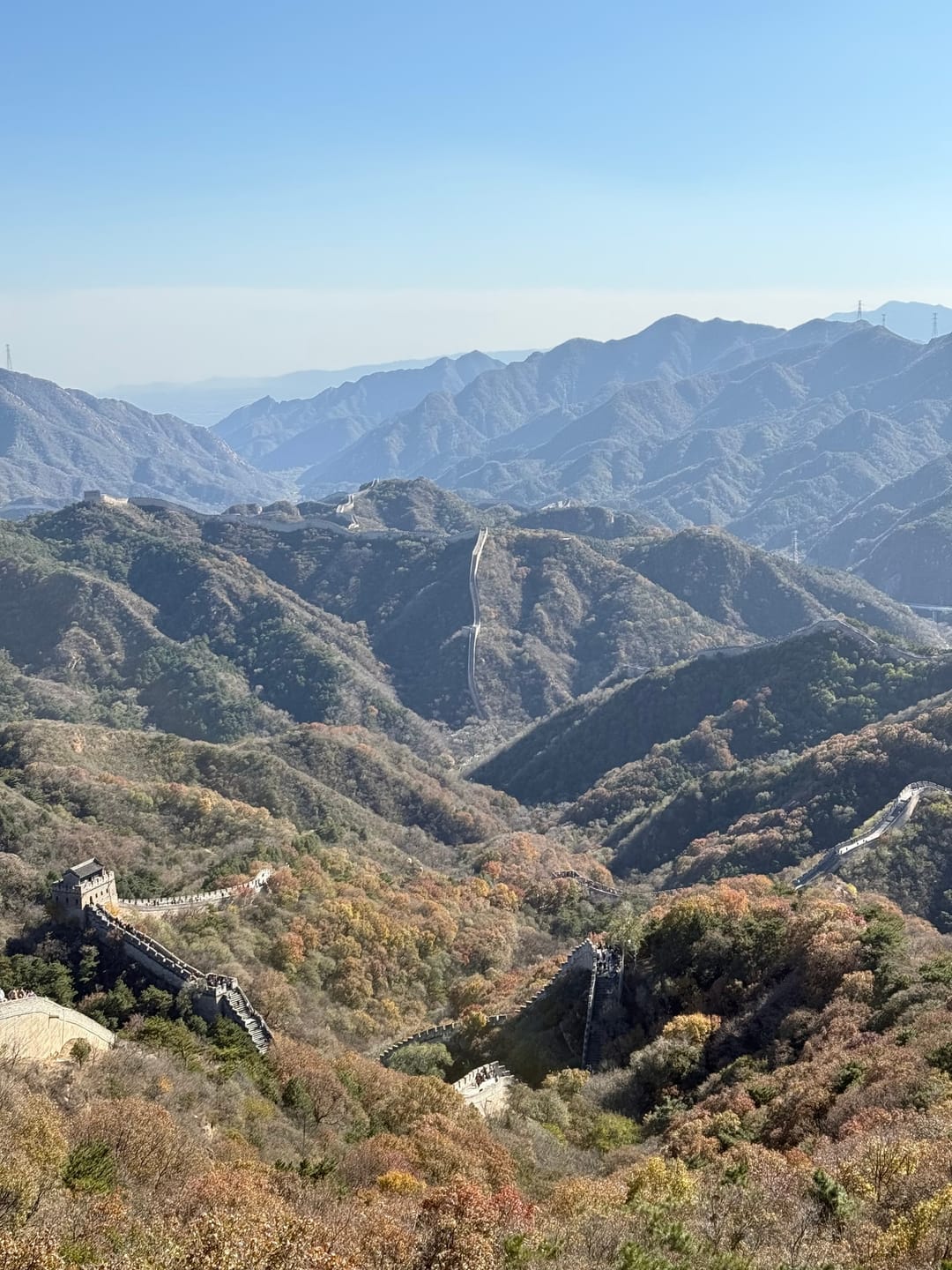
Badaling and Mutianyu both cost 40 yuan; the cable cars add 100 one way or 140 return. A day at Badaling by train, with a return cable car, comes to about 230 yuan, as calculated in the Great Wall guide.
Other cities
The best-known sights elsewhere, at their 2026 prices from each site or its provincial authority:
| Sight | Ticket | Worth knowing |
|---|---|---|
| Terracotta Army, Xi’an | 120 yuan | Booked online under your passport |
| Xi’an City Wall | 54 yuan | Bikes on the wall 45 yuan for 3 hours |
| Shaanxi History Museum, Xi’an | Free | Booked online, 5 days ahead from 17:00 |
| Giant Panda Base, Chengdu | 55 yuan | |
| Leshan Giant Buddha | 80 yuan | |
| Li River cruise, Guilin to Yangshuo | 215 yuan | 360 on the four-star boats |
| Zhangjiajie Forest Park | 165 yuan, 236 with the eco-bus | Valid four days; Bailong lift 65 one way |
| Huangshan | 190 yuan | Cable cars extra |
| Jiuzhaigou | 190 yuan and a 90-yuan bus | 80 and 80 from mid-November to March |
| Potala Palace, Lhasa | 200 or 100 yuan, by route | Booked 10 days ahead |
Updated:
At the Terracotta Army, free entry for children and seniors applies to Chinese nationals only, according to the museum’s ticket page. Tibet runs a winter campaign of free entry to its rated scenic areas, temples excepted, from 15 October 2026 to 15 March 2027, as reported from its culture and tourism department; a trip there also needs a permit arranged through an agency.
Free museums and sights
More than 91% of China’s 7,188 registered museums were free at the end of 2025, according to the National Cultural Heritage Administration, as China News Service reported. West Lake in Hangzhou is free to walk round, and the Lingyin Temple and Feilai Feng have been free since 1 December 2025, with a booking.
Sample budgets
Three routes, priced per person for two people sharing, without the international flight. Train fares are second class on 12306, the domestic flight the October 2026 average on Trip.com. How each route runs, leg by leg, is in the China itinerary guide.
One week: Beijing and Shanghai
Four nights in Beijing, three in Shanghai, and the high-speed train between them, 553 to 661 yuan. About 2,300 yuan on a budget, 4,300 mid-range and 8,700 in comfort with a first-class seat: roughly €300, €570 and €1,160 at the European Central Bank’s rate of 7 October 2026, or $320, $600 and $1,220.
Two weeks: Beijing, Xi’an, Chengdu and Shanghai
Add the train from Beijing to Xi’an, 494 to 618 yuan, on to Chengdu, 263 to 316, and a flight from Chengdu to Shanghai, about 700 to 790 yuan with taxes. About 4,900 yuan on a budget, 9,000 mid-range and 17,500 in comfort: roughly €650, €1,200 and €2,340, or $690, $1,260 and $2,450.
Three weeks: adding Guilin, Hangzhou and Suzhou
A flight from Shanghai to Guilin, about 760 to 850 yuan, and the short trains to Hangzhou and Suzhou bring the transport to about 2,500 yuan. About 7,500 yuan on a budget, 13,700 mid-range and 26,500 in comfort: roughly €1,000, €1,830 and €3,540, or $1,050, $1,920 and $3,710.
City by city
The same trip costs more in Shanghai and Beijing than in the cities of the west and south, mostly because of the room.
Shanghai
The most expensive city for hotels: star hotels averaged 770 yuan a night from January to August 2026. Meals and the metro cost the same as in Beijing, and many of the best sights, the Bund, the lanes of the former French Concession, Shanghai Museum East, are free.
Beijing
Star hotels averaged 613 yuan in the summer of 2024, the latest breakdown, with four-star rooms around 530. The paid sights cost little, 60 yuan for the Forbidden City, but the Great Wall adds a day of transport and cable cars.
Xi’an and Chengdu
Rooms cost about two thirds of Beijing’s, and food much less: an inexpensive meal costs under 20 yuan, a mid-range dinner for two 120 to 150, on Numbeo’s figures. The large sights, the Terracotta Army at 120 yuan or the panda base at 55, are the main extra.
Guilin and the countryside
Guilin’s star hotels averaged 292 yuan in the summer of 2024, the cheapest of the cities above. The Li River cruise, 215 yuan on the classic boat, is the single largest ticket of the region.
Costs people forget
A few lines appear in no daily budget and add up over two weeks.
Inside the sights
Cable cars and shuttles: 140 yuan for a return cable car on the Great Wall, 15 for the Mutianyu shuttle, 71 more for the eco-bus at Zhangjiajie, 90 for the Jiuzhaigou bus. Audio guides: 40 yuan in English at Shanghai Museum East. Booking in advance costs nothing.
Payments and money
The 3% fee on mobile payments above 200 yuan, and your bank’s own foreign-currency and withdrawal fees, apply to every large bill: 4,000 yuan of hotel bills paid through an app, for example, add 120 yuan in fees.
Luggage and extras
Sending a suitcase from your door to the station costs 68 yuan an item at 111 stations, a service 12306 launched in January 2026. Data for a month costs $16 to $26.50 with an eSIM.
Travelling with children
Children cost much less than adults. On trains, children from 6 to the day before their 14th birthday pay a child fare, half the fare charged in second and first class on high-speed trains since 6 September 2025, and under-sixes travel free without a seat, according to 12306. Badaling is free for under-18s, and the Shanghai Museum’s exhibition costs 74 yuan for ages 6 to 18. At the Terracotta Army, free entry for children applies to Chinese nationals only. A family room, or two rooms in a budget chain, is the line that grows most.
When China costs more
Prices follow the holidays more than the seasons. Around National Day 2025, a survey of about 50 cities by the Yangcheng Evening News found hotel rates rising from a few percent to several times their usual level, with the biggest jumps in tourist towns. The weeks around the Lunar New Year, 1 May and 1 October are the most expensive and the most crowded; trains sell out at release, and some sights raise their prices or need longer bookings. The 2026 dates and the 2027 calendar are in the best time to visit China.
The 2026 National Day week was calmer for hotels: rates in Beijing and Shanghai stayed within about 10% of normal, according to an analysis of booking prices published by Sohu, while some small hotels in tourist towns multiplied theirs, one in Jingdezhen elevenfold. Domestic flights, on the other hand, averaged about 930 yuan that week and fell by more than 30% afterwards.
Paying without losing money
Most costs in China are paid by phone, and the fees are small if you know where they fall.
Alipay and WeChat Pay
Both take foreign cards. Payments of 200 yuan or less carry no fee; above 200 yuan the fee is 3% of the whole amount, so a 201-yuan bill costs 6.03 yuan more, according to WeChat Pay’s notice of 15 January 2026. Until 31 December 2026, new WeChat Pay users with a foreign card pay no fee for 90 days on up to 1,000 yuan a day. Your own bank may add its foreign-currency fee on top.
Cash and cards
A foreign card can withdraw up to 3,000 yuan per transaction at ATMs showing its network’s logo, and your bank’s withdrawal fee applies; withdraw less often, in larger amounts. Hotels and larger shops take Visa and Mastercard directly. The full picture is in paying in China.
The tax refund
Visitors get part of the VAT back on purchases of at least 200 yuan in one registered shop on one day: 11% of the price, or 8% on some goods, minus the agent’s fee. In shops offering the instant refund, the money comes on the spot against a credit-card guarantee, and you must leave China within 28 days; since 1 September 2026, a refund started in one city can be closed at any exit port, according to the State Taxation Administration.
Ways to save
- Travel outside the holiday weeks: rooms, flights and trains all cost more, and sell out.
- Take second class: on the main lines first class costs about 1.6 times as much for the same trip.
- Use the night train on long routes: a berth on the D7 from Beijing to Shanghai cost 440 yuan in October 2026 and replaces a hotel night.
- Pay the metro with your contactless card or a day pass rather than taxis across town.
- Go to the Great Wall by train: about 230 yuan for a day at Badaling, cable car included.
- Eat where people around you eat: breakfast counters and canteens cost a fraction of hotel restaurants.
- Keep the free sights in the plan: Tiananmen Square, the National Museum, the Bund, Shanghai Museum East and West Lake cost nothing.
- Withdraw cash in larger amounts, up to 3,000 yuan per withdrawal, if your bank charges per withdrawal.
- Claim the tax refund on purchases of 200 yuan or more in registered shops.
Frequently asked questions
How much does a trip to China cost? For two weeks, about 4,900 yuan per person on a budget, 9,000 mid-range and 17,500 in comfort, two people sharing, plus the flight.
How much does China cost per day? In yuan: 200 to 270 for a backpacker’s day, 410 to 650 for a mid-range one, 950 to 1,250 for a five-star one, each person sharing a room.
Is China expensive to visit? Not on the ground. Transport and food cost little; rooms in Shanghai and Beijing and the long-haul flight are the large items.
How much does a China visa cost? Free for British, Canadian, Australian and most EU passport holders until the end of 2026; a US passport holder pays $140.
How much are flights to China? About £670 return from London and $960 to $1,270 from US airports, on twelve months of KAYAK searches.
How much does a hotel in China cost? Star hotels averaged 360 yuan a night in 2025, Shanghai’s 770 in 2026; budget chains average about 160 to 220 yuan, and a hostel bed €7 to €27.
How much is the train from Beijing to Shanghai? 553 to 661 yuan in second class on 12306 in October 2026, for 4 hours 18 minutes on the fastest train.
How much cash should I bring to China? Little: most payments go through Alipay, WeChat Pay or a card. A few hundred yuan cover the stalls and taxis that prefer cash, and ATMs give up to 3,000 yuan per withdrawal.
Do you tip in China? No. Restaurants, taxis and hotels do not count on it; upscale hotel restaurants may already put about 10% on the bill.
Do you need travel insurance for China? It is not an entry condition. A policy that covers medical treatment abroad is a choice to make before you leave.
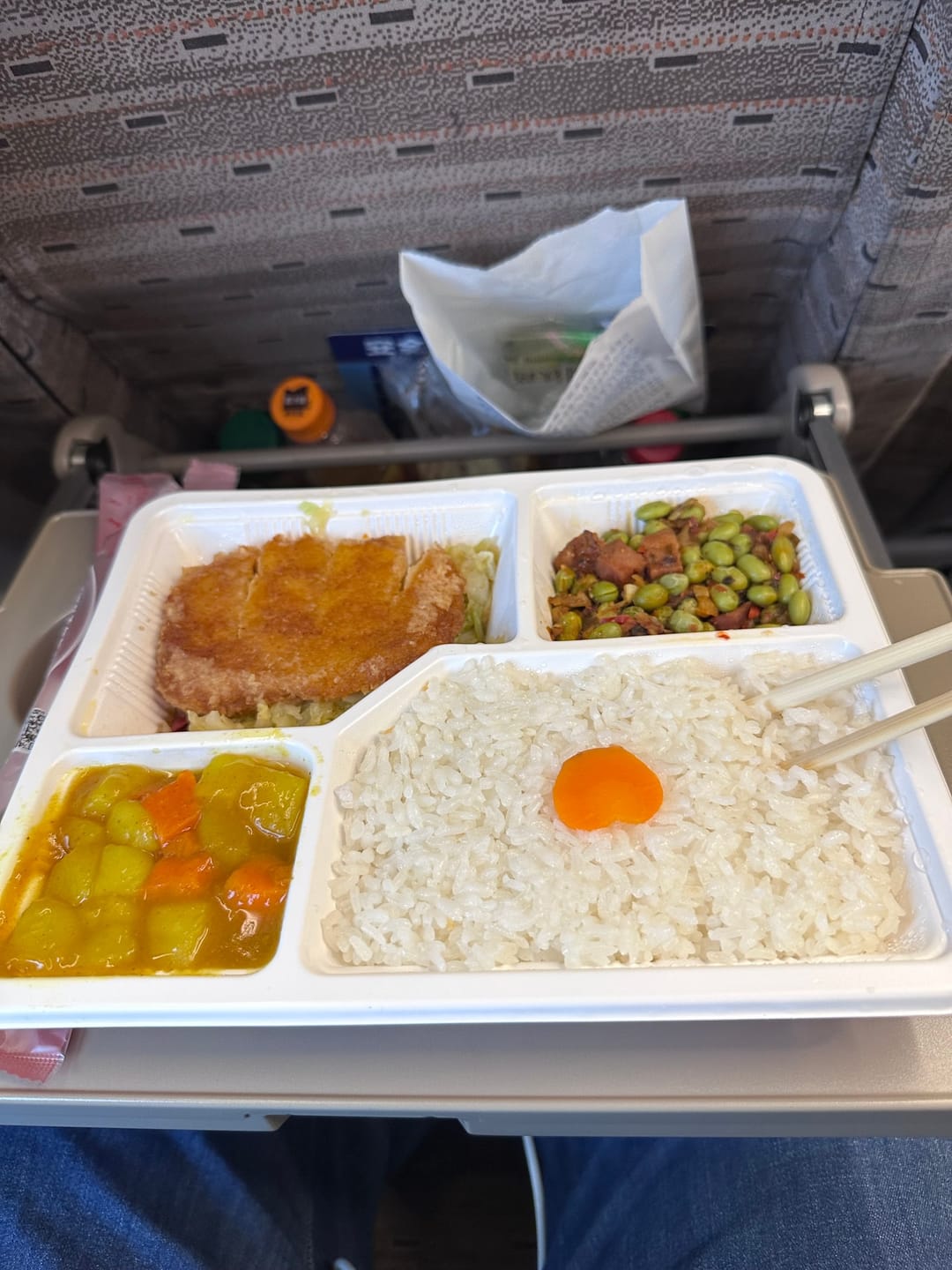
How much does a meal cost in China? A bowl of noodles or a canteen tray costs 18 to 30 yuan in most cities, and breakfast items a few yuan each.
When is China cheapest? Outside the Lunar New Year, the first days of May and the week from 1 October, and on weekdays.