Practical · Trip planning
Best time to visit China: weather, regions and holiday weeks
When to visit China, from official climate normals for six cities and the real holiday calendar: the months that work, region by region, and the weeks to avoid.
thechinaatlas.com/en/best-time-to-visit-china
In this article
For a first China itinerary that links Beijing, Xi’an and Shanghai, April, May, September and October give the most comfortable mix of temperature and dry days. The weather is only half the answer, though. China’s national holidays move hundreds of millions of people at once, and a well-chosen month can still land you in the busiest week of the year. Plan around the holidays first, then pick the region that suits the season.
When is the best time to visit China?
Spring and autumn work across most of the country. In Beijing, daytime highs average 21°C in April and 19°C in October, against 32°C in July and 2°C in January, according to the climate normals of the World Meteorological Organization. Shanghai follows the same curve, a little warmer in winter and wetter in early summer.
The south and the southwest change the picture. Guilin and Guangzhou are at their wettest from April to June, and drier from October to February. Yunnan’s capital, Kunming, sits at 1,892 metres and stays mild all year, with its rains concentrated between June and September. Tibet is the reverse of the plains: its dry months are from October to April, its rain falls in July and August, and its season for travellers runs through the summer.
So the default for a first trip is spring or autumn, shifted a few weeks to miss the holidays described below. If you can only travel in summer, go north, west or up into the mountains; if you can only travel in winter, go south or to Yunnan.
The holiday weeks matter more than the weather
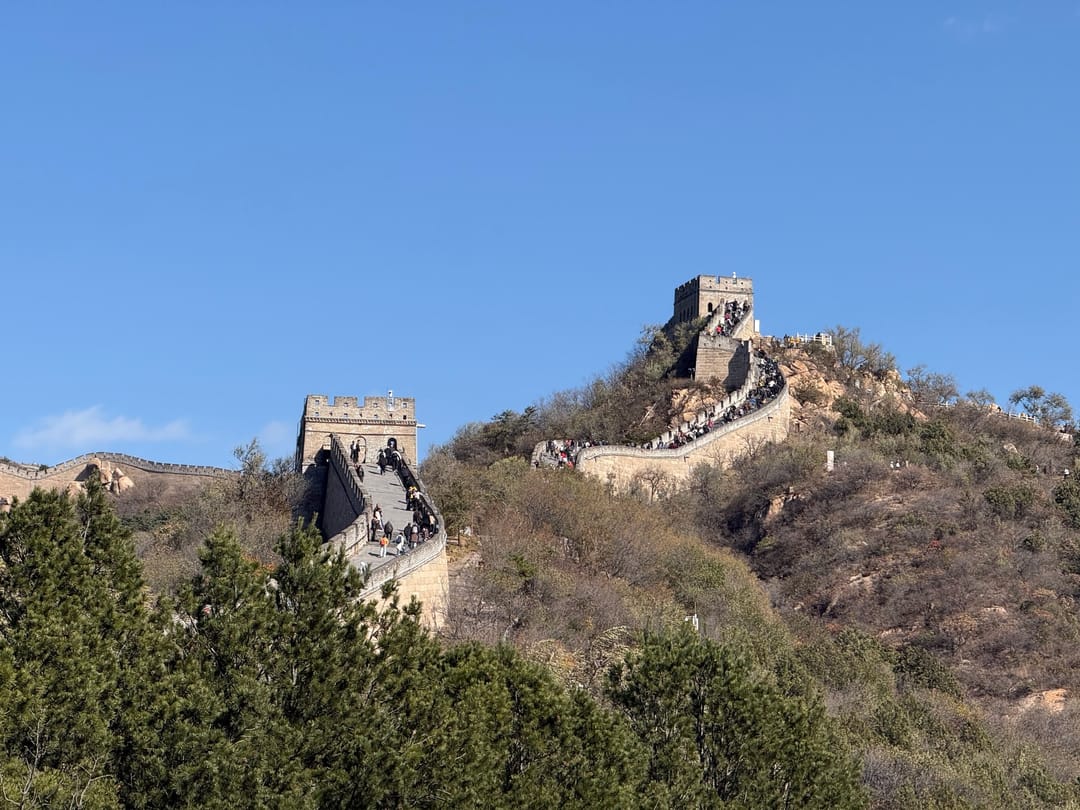
China’s public holidays are set each year by the State Council, with weekend working days swapped in to make longer breaks. Those breaks are when the whole country travels.
Spring Festival
The Lunar New Year is the largest. In 2026 the holiday ran for nine days, from 15 to 23 February, under the State Council’s notice of November 2025. Across the 40-day travel season around it, the planning commission counted 9.41 billion trips between regions. Even the busiest sights adjust: the Palace Museum closed for the whole of New Year’s Eve, 16 February, in 2026. What the festival looks like on the ground, from the temple fairs to the train sale dates, is in the guide to Chinese New Year in China.
Labour Day and National Day
The 1 May holiday now lasts five days, from 1 to 5 May in 2026. National Day lasts seven, from 1 to 7 October. During the 2026 National Day week, the Ministry of Transport estimated 2.14 billion trips between regions, 152 million of them by train, and China Railway reported a single-day record of 25.2 million passengers on 1 October. The 2025 holiday, merged with the Mid-Autumn Festival into eight days, counted 888 million domestic tourist trips, according to the culture and tourism ministry.
| 2026 holiday | Days off | Working days added |
|---|---|---|
| Spring Festival | 15-23 February | 14 and 28 February |
| Qingming | 4-6 April | |
| Labour Day | 1-5 May | 9 May |
| Dragon Boat | 19-21 June | |
| Mid-Autumn | 25-27 September | |
| National Day | 1-7 October | 20 September, 10 October |
Updated:
School holidays add softer peaks. In 2027, Beijing’s primary and middle schools break from 18 January to 21 February and from 6 July to 31 August, according to the city’s education commission, and Shanghai’s from 23 January to 21 February and from 1 July to 31 August. Guangzhou also fills during the Canton Fair, held in three phases each spring and autumn: in autumn 2026, from 15 October to 4 November.
The 2027 calendar
The festival dates for 2027 are fixed by the lunar calendar: the Spring Festival falls on Saturday 6 February, Qingming on Monday 5 April, the Dragon Boat Festival on Wednesday 9 June and the Mid-Autumn Festival on Wednesday 15 September, with the Lantern Festival, the end of the New Year celebrations, on Saturday 20 February, according to the Hong Kong Observatory’s calendar. National Day stays 1 October. How many days off each one brings is not known yet: the State Council had not published its 2027 schedule on 8 October 2026, and its last notices came out between late October and early December. The rules in force since 2025 give the Spring Festival eight days from New Year’s Eve, and their official explanation names 2027, when the Eve falls on a Friday, as a year when the break can run to nine; wait for the notice before booking around it.

China’s weather, month by month
The tables below use the World Meteorological Organization’s standard normals for 1991 to 2020, compiled from China Meteorological Administration stations and archived by the NOAA climate centre on the WMO’s behalf. They are averages over thirty years, not a forecast.
Temperatures in six cities
Average daily high and low, in °C. The Xi’an station has 16 years of data rather than 30; Kunming’s sits at 1,892 metres.
| Month | Beijing | Xi’an | Shanghai | Guilin | Kunming | Chengdu |
|---|---|---|---|---|---|---|
| January | 2 / −7 | 5 / −3 | 8 / 2 | 12 / 6 | 16 / 4 | 9 / 3 |
| February | 6 / −4 | 9 / 0 | 10 / 4 | 14 / 8 | 19 / 6 | 12 / 5 |
| March | 13 / 2 | 17 / 6 | 14 / 7 | 18 / 11 | 22 / 9 | 17 / 8 |
| April | 21 / 9 | 23 / 12 | 20 / 12 | 24 / 17 | 24 / 12 | 23 / 13 |
| May | 27 / 15 | 28 / 16 | 25 / 18 | 28 / 21 | 25 / 15 | 26 / 17 |
| June | 31 / 20 | 32 / 21 | 28 / 22 | 31 / 24 | 25 / 17 | 28 / 21 |
| July | 32 / 23 | 33 / 23 | 32 / 26 | 33 / 25 | 25 / 18 | 30 / 22 |
| August | 31 / 22 | 31 / 22 | 32 / 26 | 33 / 25 | 25 / 17 | 30 / 22 |
| September | 27 / 16 | 25 / 17 | 28 / 22 | 31 / 23 | 24 / 16 | 26 / 19 |
| October | 19 / 9 | 20 / 12 | 23 / 17 | 26 / 18 | 21 / 13 | 21 / 15 |
| November | 10 / 1 | 13 / 5 | 18 / 11 | 21 / 13 | 19 / 8 | 16 / 10 |
| December | 4 / −5 | 7 / −2 | 11 / 4 | 15 / 8 | 16 / 5 | 11 / 4 |
Updated:
Rain
Average number of days with at least 1 mm of rain.
| Month | Beijing | Shanghai | Guilin | Kunming | Chengdu | Lhasa |
|---|---|---|---|---|---|---|
| January | 1 | 8 | 8 | 3 | 3 | 0 |
| February | 1 | 7 | 9 | 2 | 4 | 0 |
| March | 2 | 10 | 14 | 3 | 6 | 1 |
| April | 3 | 8 | 14 | 4 | 8 | 2 |
| May | 4 | 8 | 15 | 8 | 10 | 5 |
| June | 7 | 10 | 15 | 13 | 11 | 11 |
| July | 9 | 9 | 13 | 15 | 12 | 16 |
| August | 7 | 10 | 9 | 14 | 12 | 15 |
| September | 5 | 7 | 6 | 10 | 11 | 10 |
| October | 3 | 5 | 5 | 9 | 8 | 2 |
| November | 2 | 7 | 6 | 4 | 4 | 0 |
| December | 1 | 6 | 7 | 2 | 2 | 0 |
Updated:
What each month is good for
A line per month, drawn from the normals above and the holiday calendar:
- January: Cold and dry in the north, mild in the south and Yunnan. Quiet until the run-up to the Spring Festival.
- February: The Spring Festival: 6 February in 2027. Book transport early or travel either side of it.
- March: Spring reaches the south; Beijing climbs to 13°C by day. Dust is possible in the north.
- April: The first good month in the north, with highs of 20 to 24°C from Beijing to Chengdu. The Qingming break comes early in the month.
- May: Warm everywhere, wet in the south. The 1 to 5 May holiday is one of the busiest weeks of the year.
- June: Plum rains on the Yangtze from mid-month, peak rain in Guilin and Guangzhou. Good in Tibet and the northeast.
- July: The hottest month on the plains, 32 to 33°C in four of the six cities; schools are on holiday. Better at altitude.
- August: Still hot and wet in the east and south, rainy in Lhasa and Kunming.
- September: Heat fades from mid-month and the south dries out. Xi’an has its wettest month.
- October: The most reliable month for a first trip, outside the 1 to 7 October holiday.
- November: Cool and dry in the north, pleasant in the south; Beijing’s heating starts on the 15th.
- December: Cold in the north, mild in Guangzhou, Kunming and Hainan, and quiet.
Region by region
The country spans tropical islands and high plateau, so the right month depends on where you are going.
Beijing, Xi’an and the north
Beijing’s year is dry except for July and August, which bring most of its rain and its highest temperatures. April and October have highs around 20°C and few wet days, with the trees in leaf or turning. Winter is cold and dry: January nights average −7°C. Xi’an has a similar pattern, slightly warmer, and its wettest month is September. Further north, Harbin’s January highs average −12°C and its nights −22°C.
Shanghai, Hangzhou and the Yangtze
The Yangtze delta is humid year-round, with 5 to 10 rain days in most months. Spring and autumn are pleasant, October being the driest month in both Shanghai and Hangzhou. June brings the plum rains, and July and August average highs of 32 to 34°C. Winter days stay around 8 to 11°C, damp rather than freezing.
Guilin, Guangzhou and the south
The south is warm to hot all year. Its wet season runs from spring into early summer: Guilin averages 15 rain days in June and Guangzhou 16. From October to February it turns drier and milder, with Guangzhou’s January highs around 19°C. Hainan, at the far south, averages January highs of 21°C in Haikou and stays warm through the winter.
Yunnan and Sichuan
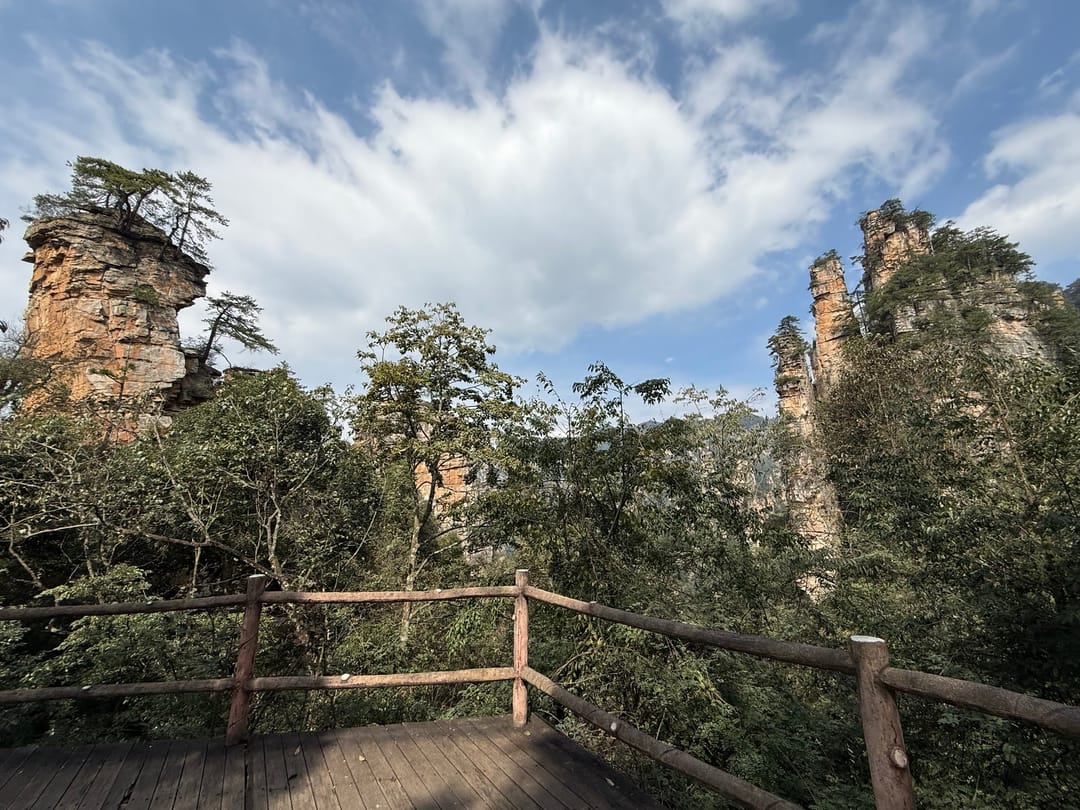
Kunming’s highs stay between 16 and 25°C all year, and its dry months run from November to April. Chengdu is milder than Beijing in winter, with its rain peaking in July and August; the Chengdu guide sets its sunshine against Beijing’s. Zhangjiajie, in Hunan, receives most of its rain from May to July, according to the China Meteorological Administration’s station data; its viewpoints are higher and cooler than the city station.
Tibet
Lhasa stands at 3,650 metres. Its summer brings the rain, about 16 days in July, and its winter is dry and cold at night, with January lows of −7°C. Foreign visitors need a Tibet travel permit on top of a Chinese visa or visa exemption. Travel agencies report that permits have usually been suspended for part of February and March, but that they were issued normally in March 2026: the decision is taken year by year.
Beyond the classic route
The far west, the northern grasslands and the subtropical south follow calendars of their own. The figures are the WMO normals for 1991 to 2020, except where stated.
Xinjiang
Xinjiang is dry and continental. Urumqi averages 30°C by day in July and −7°C in January, Kashgar 32°C in July, and Turpan, in its depression, 40.5°C in July with fewer than four rainy days a year. Late spring and early autumn are the comfortable windows: in October, Urumqi reaches 14°C by day and Kashgar 20°C.
Inner Mongolia
The grasslands around Hailar are a summer destination. July averages 26°C by day and 15°C at night, while January drops to −19°C by day and −29°C at night, according to China Meteorological Administration normals for 1981 to 2010. Most of the year’s rain falls in July and August, when the steppe is greenest.
Hong Kong
Hong Kong is warm year-round: 18.7°C by day in January, 31.6°C in July, according to the Hong Kong Observatory. Rain peaks from June to August, with 15 to 16 days a month of at least 1 mm, and tropical cyclones can strike from May to November, most likely from July to September. October to December is the driest and most comfortable stretch.
Hainan
Hainan, the island province in the far south, is the winter beach option. Haikou averages 21°C by day in January, and the resorts of Sanya, on its south coast, fill with domestic visitors around the Spring Festival. Its summer brings heavy rain and the typhoon season. Hainan also admits nationals of 61 countries without a visa for 30 days.
Season by season
Each season trades one advantage for another.
Spring
March to May warms the south first and the north a few weeks later, and brings the most comfortable sightseeing temperatures in the north. It also brings the Qingming and Labour Day holidays, and, in the north, the dust season.
Summer
June to August is hot and wet across the plains and the south, and busy with school holidays. It suits the high country: Yunnan’s mountains, Tibet, and the northeast.
Autumn
September to November is the most reliable season for a first trip, with dry days in the north and the end of the rains in the south. Its weak point is the first week of October.
Winter
December to February is cold in the north, mild in the south and quieter everywhere, except around the Spring Festival. In Beijing the days are dry, with January averaging one rainy or snowy day.
Festivals and seasonal sights
Some trips are planned around one event rather than the average weather.
Harbin’s ice and snow
Harbin’s Ice and Snow World, a park of illuminated ice buildings, opened on 17 December 2025 for its 2025-26 season, and the city’s ice and snow festival on 5 January 2026. The season depends on the cold: a spell of temperatures above freezing closed the park early, on 21 February 2026, Xinhua reported. The 2026-27 opening date had not been announced on 8 October 2026; previous seasons opened in mid to late December. Expect January days around −12°C and nights near −22°C.
Blossom season
Spring flowers move north with the warmth. Rapeseed turns the terraces of Luoping in Yunnan yellow from February to mid-March, and those of Wuyuan in Jiangxi from late February to March. Wuhan University’s cherry trees peak around mid-March, with free entry booked online under your name three days ahead in 2026, a passport accepted. In Beijing, Yuyuantan Park’s cherry blossom festival opened on 18 March 2026, according to the city government, and Shanghai’s Gucun Park held its own from 9 March to 9 April.
Autumn colours
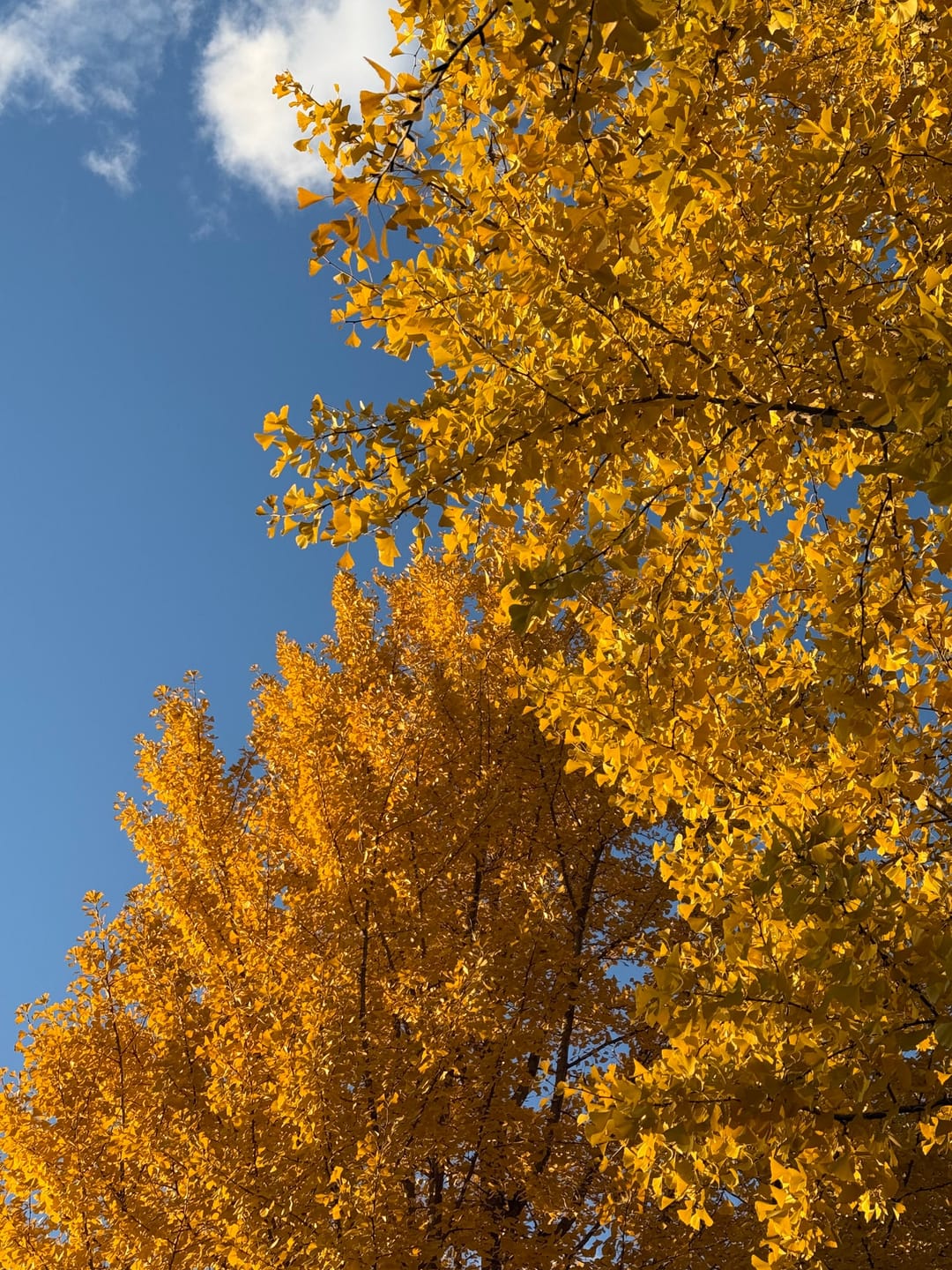
In Beijing, the Fragrant Hills red leaves festival opened on 17 October 2025, with the best colour from late October, Xinhua reported. In Sichuan, Jiuzhaigou’s lakes and forests reach 60 to 95% of their autumn colour from late October to early November, according to the county government. Entry there is booked under your name, with a cap of 41,000 visitors a day from April to mid-November, so book early for an autumn weekend.
Weather risks worth knowing
Four seasonal events are worth a line in your planning, and one year-round concern.
Plum rain on the Yangtze
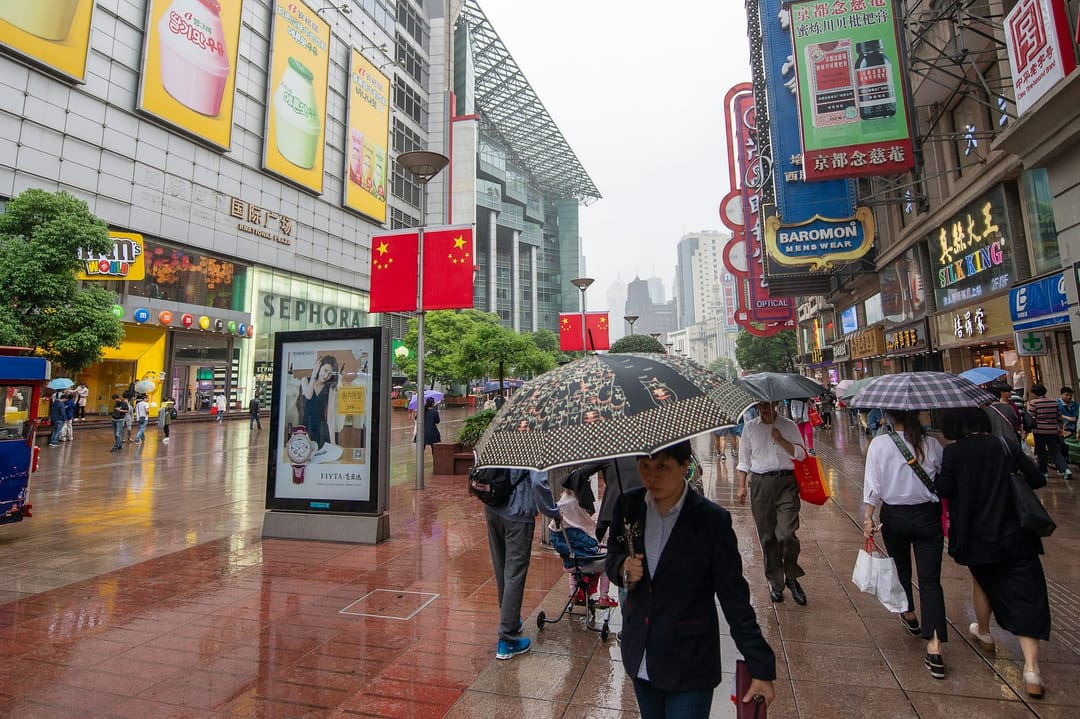
Shanghai’s plum rain season, the meiyu, starts on average on 19 June and ends on 10 July, according to the Shanghai weather bureau, with about 240 mm of rain on average over those three weeks. The whole lower Yangtze is affected, Hangzhou and Suzhou included, so it is the one period when the delta’s humidity turns into steady rain for days on end.
Typhoons in the south
Typhoons reach China’s coast from April to December, most often from July to September, and close to nine in ten make landfall in the south, according to the China Meteorological Administration. Hainan, Guangdong, Fujian and Hong Kong are the areas to watch in those months; a trip there in late summer needs some flexibility in the dates.
Dust and air quality
In the north, spring is the dust season: more than 70% of China’s sand and dust weather falls between March and May, April most of all, the weather administration says. Air quality has improved: in 2025 the average fine-particle (PM2.5) level across 339 cities was 28 µg/m³, with 88.1% of days rated good, and Beijing’s was 27 µg/m³, according to the environment ministry. Autumn and winter remain the worst season, with PM2.5 about 1.3 times the yearly average and almost all heavy-pollution days, the ministry said in February 2026.
Heating in the north
Beijing heats its buildings from 15 November to 15 March under the city’s heating regulation, which lets the government move the dates when the weather requires. Free winter heating has historically stopped at the Qinling Mountains and the Huai River, as a study in PNAS describes, so south of that line, in Shanghai, Hangzhou or Chengdu, there is no city-wide heating season and rooms are warmed by air conditioners, even though winter there is damp and close to freezing at night.
When China is cheapest
Prices follow the holidays more than the weather. Around National Day 2025, a survey of about 50 cities by the Yangcheng Evening News found hotel rates rising from a few percent to several times their usual level, the biggest jumps in tourist towns such as Yangshuo and in Macau, while the booking platforms’ national averages barely moved. The cheapest periods are the quiet ones: weekdays outside the holiday weeks and school breaks, and the north in winter outside the Spring Festival. No independent source publishes a reliable month-by-month guide to flight prices from Europe or North America, so compare fares for your own dates. A full budget, line by line, is in China trip cost.
Combining China with Japan or Korea
The calendars line up better than the weather. Tokyo’s cherry trees first flower on average on 24 March and reach full bloom on 31 March, Kyoto’s on 26 March and 4 April, according to the Japan Meteorological Agency, which fits a spring trip to northern China. Avoid Japan’s rainy season, from about 7 June to 19 July around Tokyo, and its Golden Week: in 2027 the holidays fall on 29 April and from 3 to 5 May, against China’s own break from 1 May. Korea’s Chuseok runs from 14 to 16 September 2027, around the same day as China’s Mid-Autumn Festival on 15 September, so both countries travel at once.
What to pack
Pack for the region rather than the season. Spring and autumn in the north need layers: April nights in Beijing fall to 9°C while the days reach 21°C. Summer on the plains calls for light clothes, rain gear for the Yangtze in June and July, and something warm for air-conditioned trains. Winter in the north means a proper coat, gloves and a hat, since Beijing’s January nights average −7°C, while the south and Yunnan need only a jacket. For Tibet or Yunnan’s mountains, bring warm layers even in summer: Lhasa’s nights stay around 11°C in July.
Before you book
- Check the holiday calendar for your year: the 2026 dates are official, the 2027 schedule is expected between late October and early December 2026.
- Match the region to the season with the tables above, then add a margin of a week around the holidays.
- Check who can enter China without a visa and for how long.
- For the Forbidden City, bookings open seven days ahead at 20:00 and no same-day tickets are sold, according to the Palace Museum; in a holiday week, that hour matters.
Frequently asked questions
Is April a good time to visit China? Yes for the north and the Yangtze, with highs around 20 to 24°C. Avoid the Qingming break and expect the start of the wet season in the south.
Is July a good time to visit China? On the eastern plains it is hot and wet, with Shanghai averaging 32°C highs. It works better at altitude: Kunming averages 25°C and Lhasa 23°C.
Is December a good time to visit China? For the south, Yunnan and quiet sightseeing, yes; Beijing averages 4°C by day and −5°C at night.
What is the best month to visit Beijing? October, with highs near 19°C and three rainy days on average, outside the 1 to 7 October holiday; April is the spring equivalent.
When is the best time to visit Shanghai? April, May, October and November, before and after the plum rains and the summer heat.
When is the best time to visit Zhangjiajie? September to November, after the May to July rains; spring is greener but wetter.
When is the best time to visit Guilin? October to December, when rain days drop to five or six a month.
When is the best time to visit China to avoid crowds? Outside the Spring Festival, the 1 to 5 May holiday, the 1 to 7 October week and July and August, ideally on weekdays.
When is the best time to visit Tibet? Lhasa’s mildest months are May to September, with highs of 20 to 24°C, and its rains fall in July and August. October stays dry at about 18°C. Permits are decided year by year.
When is China cheapest? Pick dates when Chinese families are not travelling, and favour midweek. Hotel rates in tourist towns can rise several times over during National Day, while the north in winter, outside the Spring Festival, is at its quietest.
Can you combine China and Japan in one trip? Yes. Late March and early April match Japan’s cherry blossom with spring in northern China, and October and November suit both. Steer clear of the first days of May, when Japan’s Golden Week overlaps China’s Labour Day break.
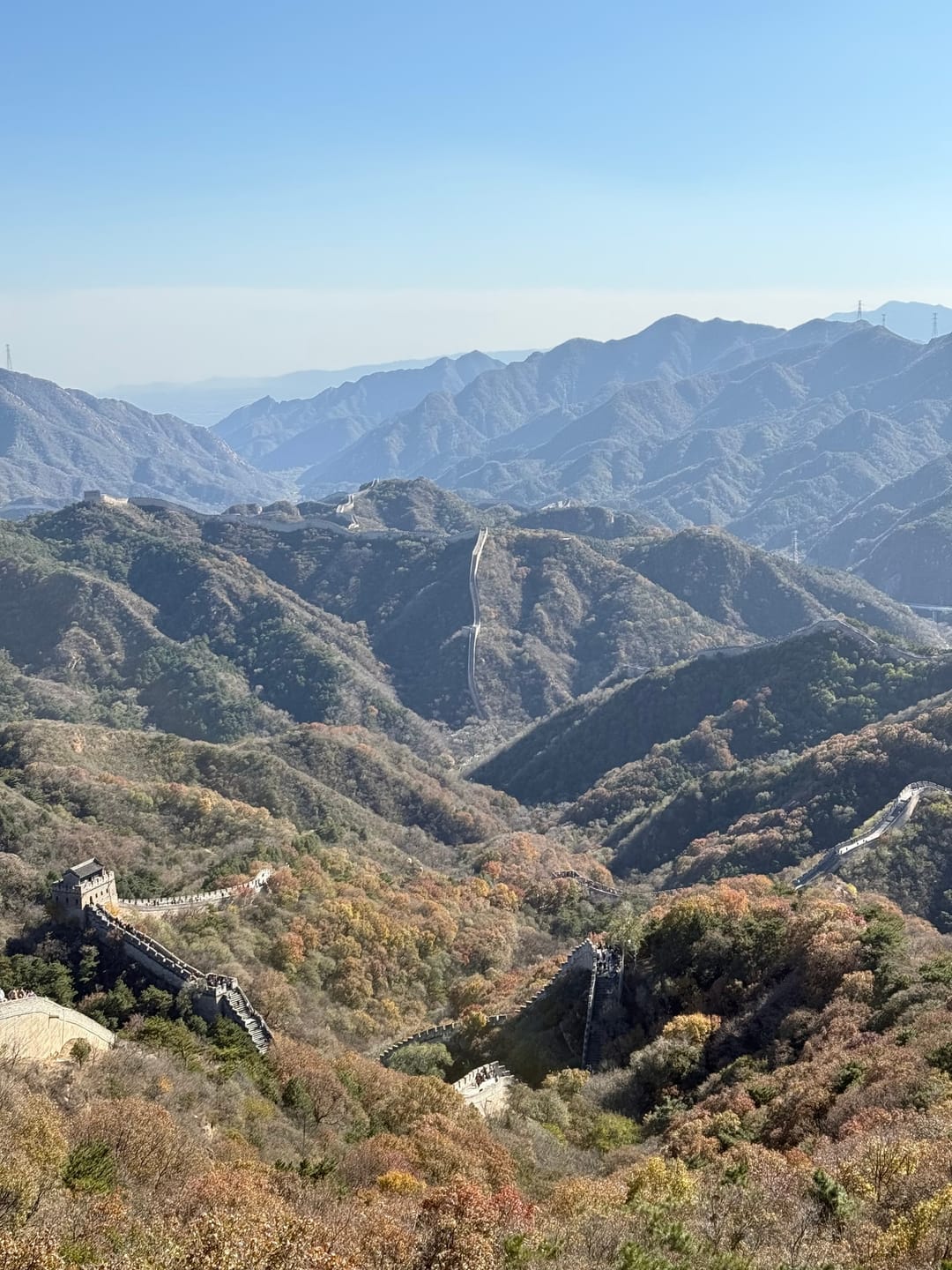
When is the best time to see the Great Wall? Spring or autumn, on a weekday outside the holiday weeks. Beijing averages three rainy days in April and in October; the Great Wall guide compares the sections.